


Introduction
Electric vehicle batteries perform best within a narrow temperature range, yet real-world conditions often push them far below it. In cold weather, reduced charge acceptance, slower power delivery, and accelerated cell damage can all affect range and long-term reliability. Silicone rubber heaters address this problem by providing flexible, even heat across battery modules, helping packs reach safer and more efficient operating temperatures. This introduction explains why that matters, how these heaters support charging and discharge performance, and what design advantages make them a practical choice in modern EV thermal management systems.
Why Silicone Rubber Heaters Matter for EV Batteries
If you have ever driven an EV in the dead of winter, you already know the struggle. The cold does not just make the cabin chilly; it actively saps battery life and severely limits driving range. Solid Battery Thermal Management is not just a luxury—it is a strict requirement for modern electric vehicles. When batteries are left to fend for themselves in freezing temperatures, the user experience plummets. Silicone rubber heaters are rapidly stepping up as the go-to solution for keeping power cells efficient and protected.
Battery temperature support
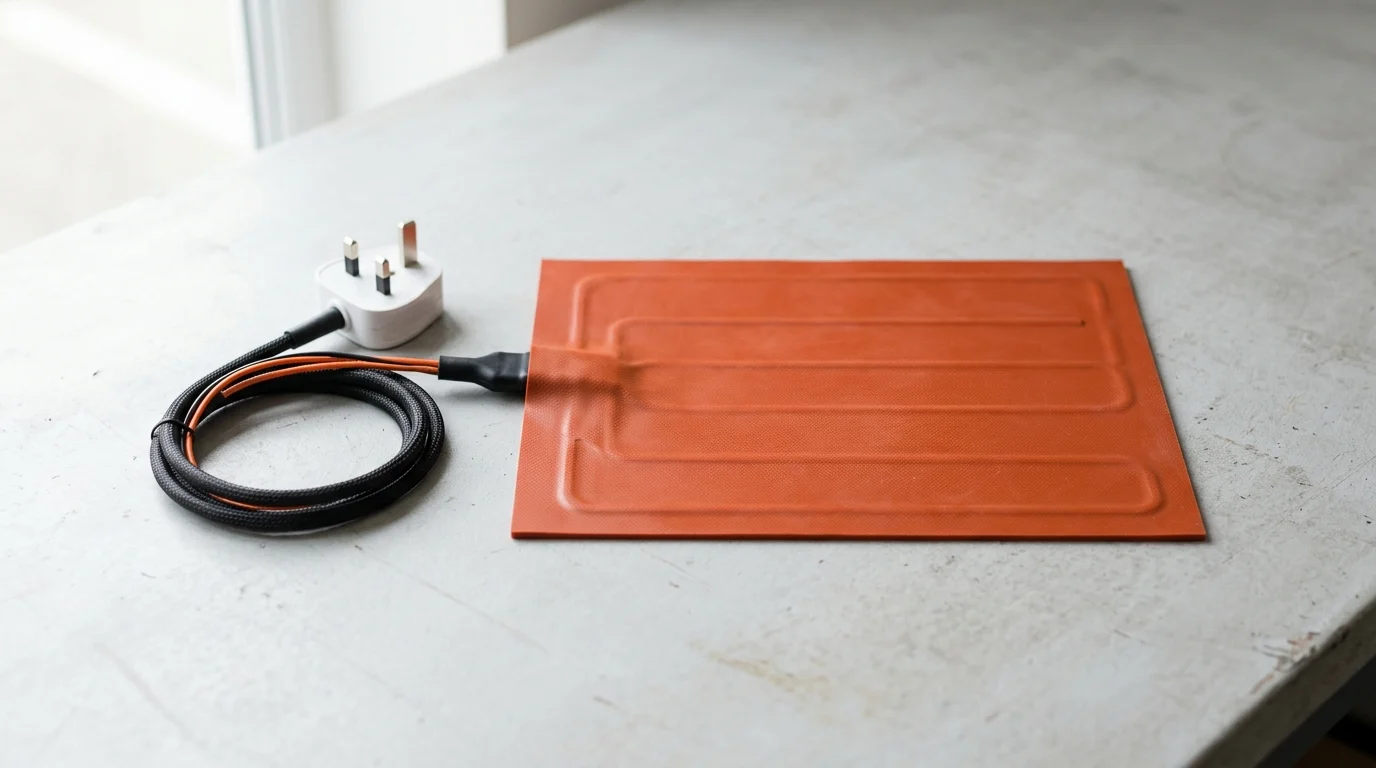
Lithium-ion cells are highly sensitive to their operating environment. Ideally, they should remain in a sweet spot between 15°C and 35°C to ensure maximum chemical reactivity and energy transfer. If the temperature dips below 0°C, attempting to fast-charge the pack becomes dangerous. It can cause lithium plating on the anode, which permanently degrades the cells and drastically shortens their lifespan. By integrating a flexible Silicone Pad, engineers can deliver uniform, consistent heat directly to the module surfaces. Because silicone is highly adaptable, these heaters wrap snugly around complex battery pack geometries, eliminating cold spots that rigid heaters might miss.
Performance trade-offs during warm-up
Active heating systems come with an inherent trade-off: balancing the power drawn from the battery for warming against the driving range ultimately saved. In extreme cold conditions, an unheated battery pack might lose 20% to 30% of its effective capacity. Firing up a silicone heater might draw anywhere from 500W to 2kW during the initial cold-start phase. However, spending that energy upfront gets the battery into its optimal operating window much faster. Once warm, the battery discharges more efficiently and safely accepts high-current regenerative braking energy. Ultimately, it is a short-term power sacrifice for a significant long-term gain in performance and range.
Which Silicone Rubber Heater Specifications to Compare

Selecting the right heating solution requires careful evaluation. Specifications for New Energy vehicle projects show a tremendous amount of variation in the market. Generic thermal pads are insufficient for high-voltage, high-density battery packs because the engineering demands are exceptionally high.
Design, power density, temperature range, and controls
Success comes down to finding the precise balance of physical design, power density, and smart thermal control. For modern EV applications, an ideal power density ranges strictly from 0.4 W/cm² to 0.8 W/cm². If the density is too low, the warm-up time drags on; if it is too high, it risks creating localized hot spots that can permanently damage sensitive battery cells. Furthermore, these heaters must operate reliably across a massive ambient temperature gradient, surviving everything from a freezing -40°C winter morning up to a 200°C internal fault condition.
| Specification | Standard Industrial Heater | High-Performance EV Silicone Heater |
|---|---|---|
| Power Density | 0.1 – 0.3 W/cm² | 0.4 – 0.8 W/cm² |
| Operating Temp Range | -20°C to 150°C | -40°C to 200°C |
| Dielectric Strength | ~1000V/min | >1500V/min |
| Material Thickness | 2.0 mm – 3.0 mm | 1.5 mm (Flexible/Low Profile) |
| Warm-up Efficiency | Moderate | Very High (Targeted surface contact) |
Durability and reliability factors
Beyond raw performance numbers, survival and longevity are critical. Automotive environments are incredibly brutal on electronic components. A battery heater needs to seamlessly withstand constant road vibration, thousands of aggressive thermal cycles, and potential exposure to condensation or leaking coolants. High dielectric strength—often required to exceed 1500V/min—is non-negotiable to prevent catastrophic electrical arcing within a high-voltage battery pack. When integrating custom solutions for Automotive Heating, ensuring the silicone matrix will not harden, degrade, or crack after five to ten years of harsh winter driving is what separates premium, reliable components from inferior alternatives.
How to Evaluate Suppliers and Long-Term Value

A perfect spec sheet is useless if the chosen supplier cannot deliver consistent quality at scale. Many promising EV projects become bottlenecked simply because the manufacturer cannot keep up with production demands or consistently fails routine quality checks.
Manufacturing capability and quality control
When evaluating a manufacturing partner, their physical footprint and equipment investments are key indicators. A reliable player in this space should have a sizable operation—such as an 8,000m² facility or larger—capable of a stable average daily output of around 15,000 pieces. However, physical scale alone does not guarantee success. Continuous investments in advanced production equipment are essential. Upgraded powder filling machines, precise pipe shrinking and bending equipment, and large high-temperature annealing furnaces (such as those introduced in 2022 for critical stress relief) demonstrate a supplier’s commitment to improving both production efficiency and product durability.
Compliance, logistics, and lifecycle support
Finally, evaluating the long game of supply chain stability is essential. Consistent lifecycle support, reliable logistics, and strict compliance ensure that these critical heating components continue to deliver value long after the initial production run.
相关阅读:EV Battery Heater
Key Takeaways
- The most important conclusions and rationale for Silicone Rubber Heater
- Specs, compliance, and risk checks worth validating before you commit
- Practical next steps and caveats readers can apply immediately
Frequently Asked Questions
Why are silicone rubber heaters important for EV batteries in cold weather?
They keep lithium-ion cells near 15°C to 35°C, improving range, charging safety, and regenerative braking while reducing cold-related capacity loss.
What power density is recommended for EV battery silicone heaters?
For most EV battery packs, 0.4 to 0.8 W/cm² is the practical target to balance warm-up speed and avoid damaging hot spots.
How much power can a silicone heater draw during battery warm-up?
Initial cold-start heating typically uses about 500W to 2kW, depending on pack size, ambient temperature, and the heater layout.
What specifications should buyers compare on Jingwei Heat silicone rubber heaters?
Focus on power density, operating range, dielectric strength above 1500V/min, low-profile thickness around 1.5 mm, and reliable temperature controls.
How can you judge a silicone heater supplier for EV battery projects?
Check manufacturing capacity, quality control consistency, custom design support, and durability for vibration, moisture, and repeated thermal cycling.
Post time: May-14-2026