


Introduction
Flange and screw plug heating tubes both heat fluids by direct immersion, but their mounting method, size range, and service capacity make them suitable for very different systems. In practice, the choice affects installation complexity, sealing reliability, maintenance access, and how much heat a vessel can safely handle. This article compares the two designs in clear, practical terms, including where each is commonly used, how their structural limits differ, and what to consider for pressure, tank size, and replacement needs, so you can match the heater type to the application before moving into detailed specifications.
Flange vs. Screw Plug Heating Tubes
In my years working with industrial thermal management systems, I’ve found that choosing the right Immersion Heating method often comes down to a battle between two heavyweights: flange and screw plug designs. While both do an excellent job of transferring heat directly into liquids or gases, their mechanical designs dictate entirely different use cases. I usually tell clients to look at their vessel size and pressure requirements before anything else.
To put it in perspective, standard screw plug sizes generally max out at 2.5 inches in diameter, making them ideal for localized heating. On the other hand, flanged units easily scale from 3 inches up to massive 14-inch (or larger) assemblies designed to heat thousands of gallons in high-capacity industrial tanks. Understanding these physical limits is the first step in designing an efficient system.
Key differences
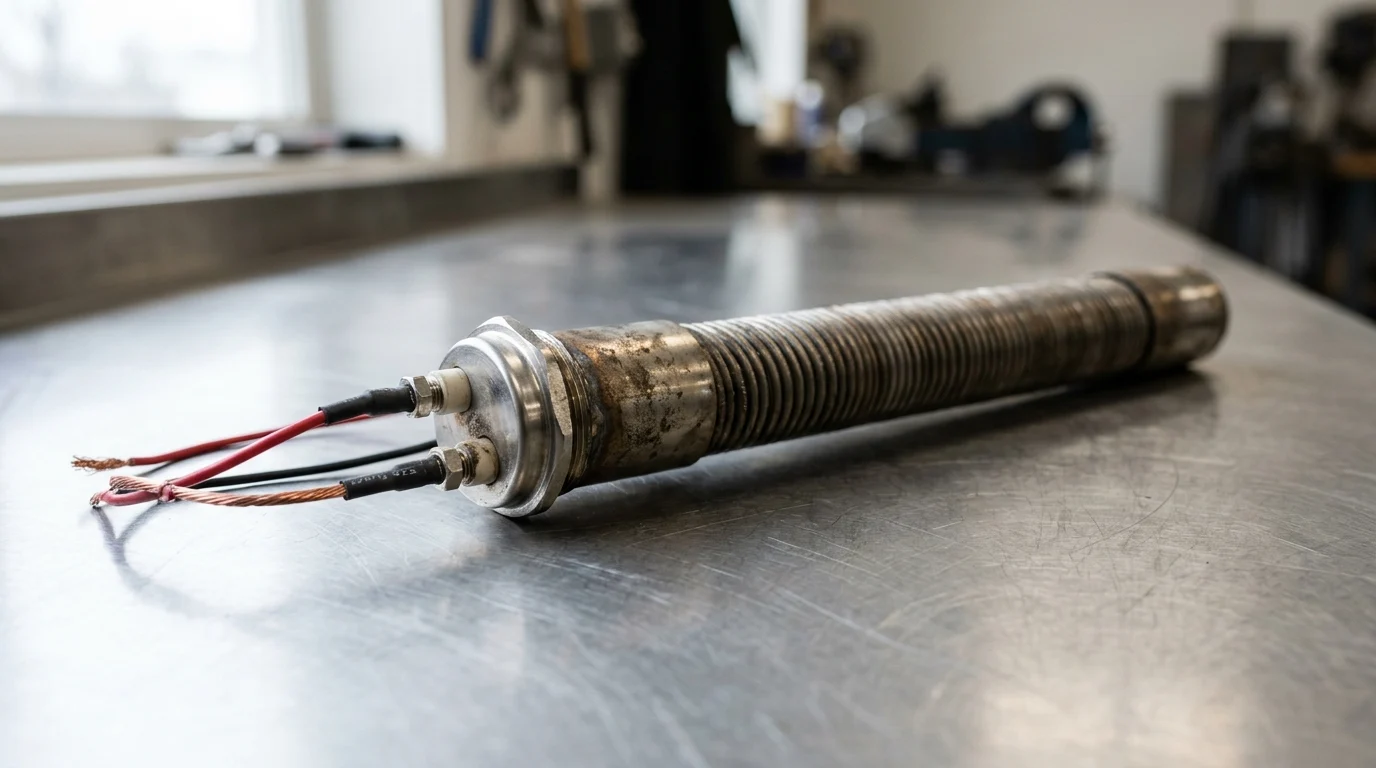
The most obvious physical distinction is how we mount these elements into a vessel. A Screw Plug Heater features tubular elements brazed or welded into a threaded hex plug. You simply screw this directly into a tapped hole or a threaded coupling on the tank wall. We typically see them utilizing standard NPT or BSP thread sizes ranging from 0.5 to 2.5 inches. Installation requires nothing more than the right wrench and some thread sealant.
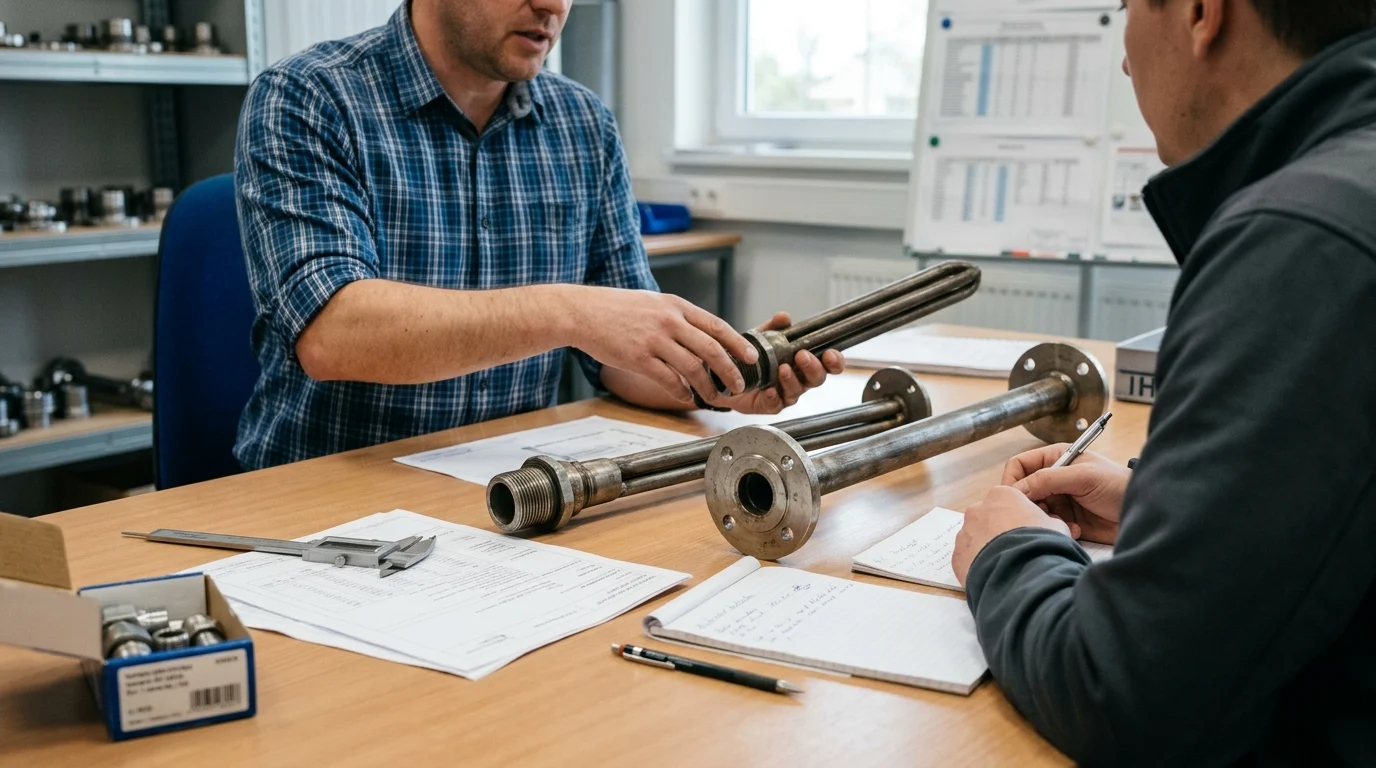
On the flip side, a flanged heater consists of hairpin tubular elements welded or brazed into a standard ANSI or DIN pipe flange. Instead of threading it in, you bolt it to a matching companion flange welded to the tank wall. This requires a precision gasket—often made of EPDM, silicone, or PTFE depending on the temperature—to create a leak-proof seal. These flanges are heavily regulated by pressure classes, frequently starting at 150 lbs and going up to 300 lbs or 600 lbs ANSI ratings for extreme environments.
Typical applications
Because of their compact nature, I usually recommend screw plugs for smaller, localized heating tasks. You will see them everywhere as a standard Water Tank Heater, in freeze protection setups, or in smaller parts washers and lubricating oil reservoirs. They are perfect for tight spaces where a bulky flange would simply get in the way.
Flanged heaters, however, are the go-to for heavy-duty, high-wattage industrial processes. When we are dealing with massive chemical mixing vats, large-scale petroleum storage, or a robust Boiler Heating Element application, the flanged design provides the structural integrity necessary. It securely supports multiple heating elements extending deep into the fluid, ensuring even heat distribution across large volumes.
Performance and Cost Comparison

When we evaluate performance, we have to look closely at watt density, total power output, and how those factors influence our operating budgets over time. Both types of heaters can be customized with various sheath materials like Incoloy, stainless steel, or titanium to resist corrosion, but their power ceilings are vastly different.
Operating voltage also plays a major role here. While a small screw plug might run efficiently on 120V or 240V single-phase power, high-capacity flanged units almost exclusively rely on 480V or 600V 3-phase systems to deliver massive amounts of energy without drawing unmanageable amperage.
Technical comparison points
Let’s break down the technical limits. Because a screw plug is physically constrained by its thread size, you can only fit a limited number of heating elements onto the plug itself. Usually, I see screw plugs maxing out around 30 to 40 kW. Flange heaters, with their significantly larger surface areas, can accommodate dozens of elements, easily pushing power outputs beyond 500 kW.
| Feature | Screw Plug Heater | Flange Heating Tube |
|---|---|---|
| Max Power Output | Up to ~40 kW | 500+ kW |
| Mounting Style | Threaded (NPT/BSP) | Bolted with Gasket |
| Typical Pipe Sizes | 0.5 to 2.5 inches | 3 to 14+ inches |
| Pressure Rating | Up to ~150 psi | 150, 300, 600 ANSI Class |
As the table highlights, the physical constraints of the mounting style directly dictate the performance ceiling. If you are trying to heat a fast-flowing fluid in a continuous process, the sheer surface area required to transfer that heat usually rules out a screw plug immediately.
Total cost of ownership
Looking at the total cost of ownership, screw plugs definitely win on initial capital expenditure. You can often source a standard screw plug unit for well under $500, and the labor to install it takes mere minutes if your tank is already tapped. It is a highly economical solution for basic heating needs.
However, for larger operations, a flanged heater often proves more cost-effective in the long run despite a higher initial price tag (often ranging from $1,500 to $5,000+). If a massive screw plug seizes in its threads due to calcification or rust, removing it can damage the tank wall. Bolted flanges are much easier to unbolt and remove for routine descaling or replacement. This drastically minimizes expensive process downtime, which can cost thousands of dollars per hour in a commercial plant.
How to Choose the Right Heating Tube
So, how do we actually make the call on the shop floor? Selecting the right heating tube is not just about picking the cheapest option; it is about matching the heater’s thermal and mechanical specifications to your fluid dynamics and tank geometry.
I always walk my team through a systematic checklist to ensure we do not under-spec the equipment. Taking shortcuts during the sizing phase inevitably leads to premature element burnout, ruined product, or even safety hazards.
Selection steps
First, calculate your required wattage based on the fluid volume, the specific heat of the medium, the required temperature rise (Delta T), and your target heat-up time. I always recommend adding a 20 percent safety factor to this calculation to account for ambient heat loss. Once you have your target kW, look at your tank’s physical constraints.
If your tank wall is too thin to support a heavy, welded
Key Takeaways
- The most important conclusions and rationale for Heating Tube
- Specs, compliance, and risk checks worth validating before you commit
- Practical next steps and caveats readers can apply immediately
Frequently Asked Questions
What is the main difference between flange and screw plug heating tubes?
A screw plug heater threads directly into a tank opening, while a flange heater bolts to a matching flange with a gasket. The mounting method affects size, pressure rating, and power capacity.
When should I choose a screw plug heating tube?
Choose a screw plug unit for small tanks, localized heating, water tanks, oil reservoirs, or freeze protection. It works best where space is limited and power demand is moderate.
When is a flange heating tube the better option?
Use a flange heater for large tanks, high-wattage duties, or higher-pressure industrial processes. It suits chemical, petroleum, and boiler systems that need stronger mechanical support.
How do power capacities compare between screw plug and flange heaters?
Screw plug heaters usually reach about 30–40 kW. Flange heaters can exceed 500 kW, making them better for heating large fluid volumes quickly and evenly.
Can Jingwei Heat customize heating tubes for different media and voltages?
Yes. Jingwei Heat can match sheath materials like stainless steel, Incoloy, or titanium and support common voltages from 120/240V to higher 3-phase industrial systems, depending on the application.
Post time: Apr-29-2026