


Introduction
Choosing the right heating element affects fit, efficiency, durability, and temperature control across electronics, medical devices, and industrial equipment. Flexible silicone rubber heaters stand out because they conform to curved or irregular surfaces, reduce wasted space, and maintain reliable performance where rigid pads often fall short. This article explains five practical advantages that make them a stronger option in many thermal management applications, from faster heat transfer to better resistance in demanding environments. By the end, you’ll have a clearer basis for comparing silicone rubber heaters with traditional pads and deciding which design approach better matches your system requirements.
Why Does a Silicone Rubber Heater Matter More Than a
When I look at modern thermal management, I constantly see engineers struggling with bulky, rigid heating elements that just don’t fit today’s compact designs. When analyzing the thermal dynamics of modern electronics or industrial systems, rigid pads often create more problems than they solve. Whether it’s an analytical instrument or an outdoor telecom enclosure, space is always at a premium.
That’s where the transition to a silicone heating strip or pad really changes the game. We aren’t just talking about a minor upgrade; we’re talking about fundamentally rethinking how we apply heat to complex surfaces without adding unnecessary bulk.
How Should I Define a Flexible Silicone Rubber Heater
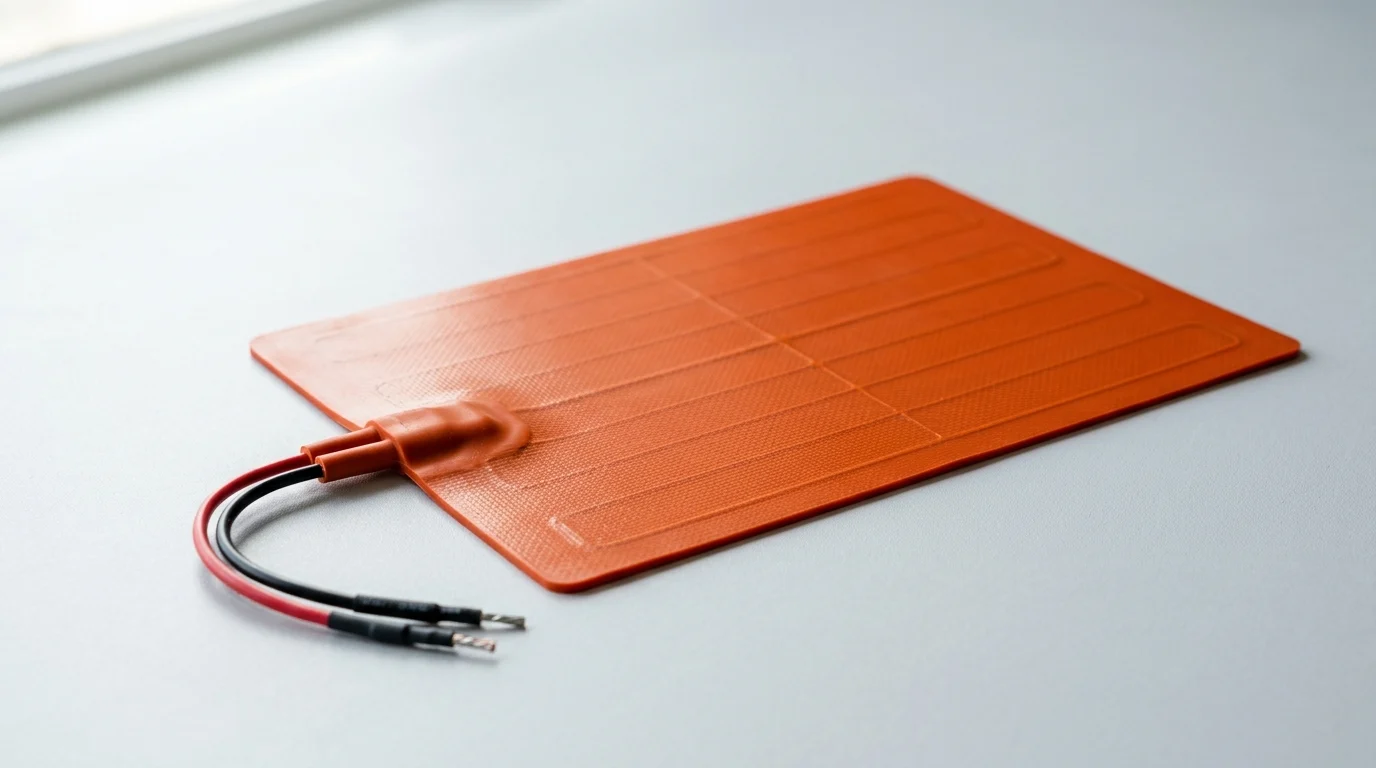
So, how do I actually define this technology? At its core, a flexible thin film heater consists of a precision-etched foil or wire-wound circuit sandwiched between layers of fiberglass-reinforced silicone rubber. This construction allows it to be incredibly thin—typically ranging from just 0.030 to 0.058 inches (0.76mm to 1.47mm) thick.
Because it easily bends to conform to curved or irregular surfaces, it eliminates the insulating air gaps that plague rigid heaters. The fiberglass provides dimensional stability, ensuring the heater doesn’t stretch or tear under mechanical stress, while the silicone offers excellent dielectric properties.
Which Comparison Criteria Best Show the Real Value of
When I evaluate these against traditional mica or ceramic pads, I focus on a few key metrics: thermal transfer efficiency, weight, and operating limits. Traditional pads often struggle with thermal lag and require perfectly flat, uniform surfaces to work properly. If there’s a gap, you get hot spots and premature failure.
In contrast, silicone rubber excels in rapid heat-up and cool-down cycles because of its low thermal mass. Let’s break down the real-world comparison:
| Feature | Silicone Rubber Heater | Traditional Rigid Pad (Mica/Ceramic) |
|---|---|---|
| Thickness | 0.030″ – 0.058″ | 0.125″ – 0.250″+ |
| Max Operating Temp | Up to 200°C (392°F) | Up to 400°C+ (but strictly rigid) |
| Flexibility | High (Conforms to tight curves) | Zero (Requires flat mounting) |
| Watt Density | Up to 40 W/in² | Typically 10-20 W/in² |
What 5 Key Advantages Make a Silicone Rubber Heater Better
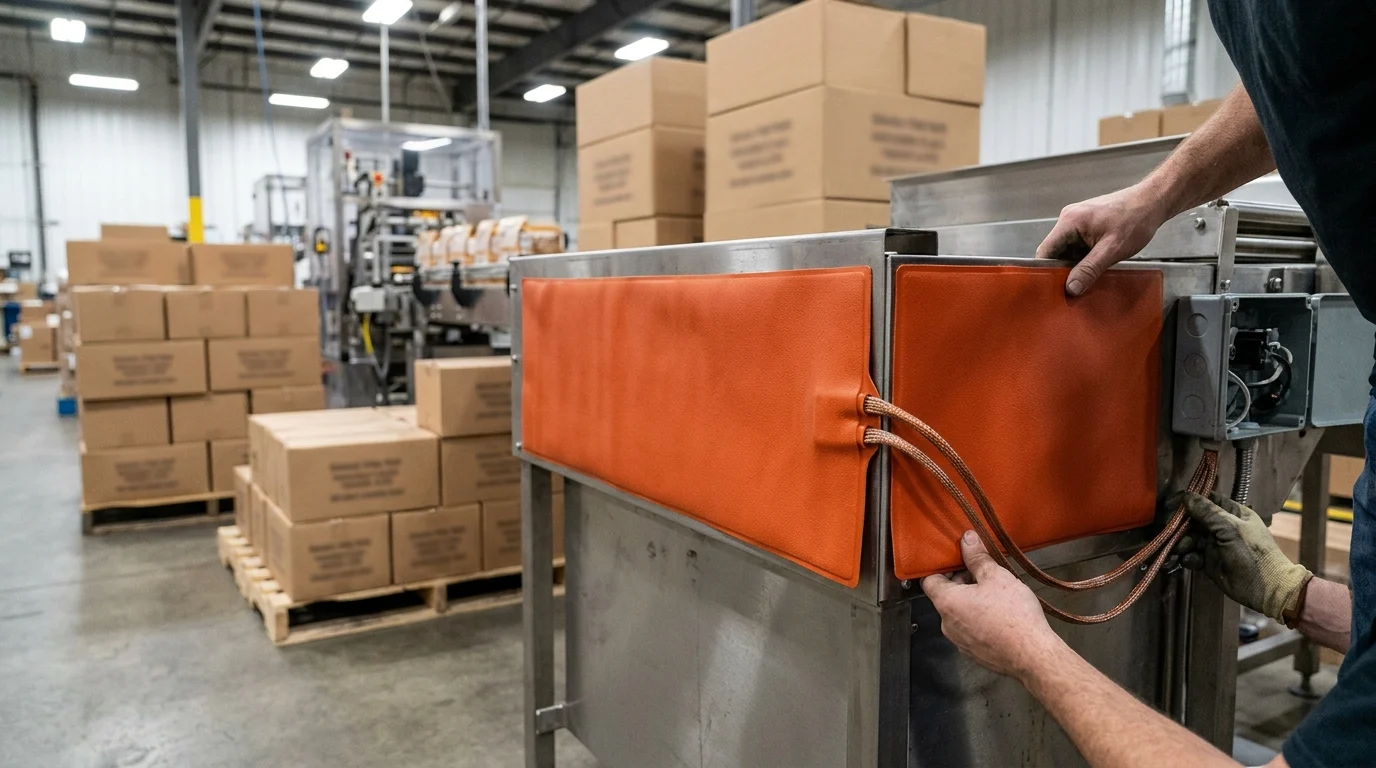
Over the years, I’ve seen countless projects where sticking with traditional heating methods resulted in compromised designs and bloated assembly times. When we switch to a flexible silicone rubber heater, five distinct advantages immediately stand out.
These aren’t just theoretical talking points; they fundamentally improve both the equipment’s performance and our manufacturing bottom line by solving spatial and thermal transfer issues simultaneously.
How Do Flexibility, Heat Transfer, and Customization Improve Equ
First, let’s talk about flexibility. Because these heaters can achieve a bend radius as tight as 0.5 inches (12.7mm), I can wrap them around pipes, cylindrical tanks, and irregular enclosures without losing vital surface contact.
Second is heat transfer. The intimate contact reduces the temperature differential between the heater and the part, allowing for highly efficient energy use and watt densities up to 40 W/in² depending on the specific application.
Third, customization is practically limitless. I frequently specify heaters with factory-cut holes, complex notches, and built-in sensors (like RTDs, thermistors, or thermocouples) exactly where the thermal profile demands them. This means the heat goes exactly where it’s needed and nowhere else, allowing for profiled heating zones on a single pad.
Why Do Durability, Installation Efficiency, and Lifecycle Cost G
The fourth advantage is extreme durability. Silicone is inherently rugged, making it a highly effective moisture-resistant heater that stands up to harsh chemicals, continuous vibrations, and mechanical shock. Many of the units I deploy easily meet IP65 or IP67 ratings for water and dust ingress, which is a lifesaver in outdoor or washdown environments.
Finally, the fifth advantage comes down to installation efficiency and lifecycle cost. By using pressure-sensitive adhesive (PSA) backing or factory vulcanization, I can cut installation time by up to 40% compared to bolting down heavy, rigid metal pads. As a truly durable heater, its extended operational lifespan drastically reduces maintenance downtime. This means the total cost of ownership over a five-year period is significantly lower, easily offsetting any initial premium in unit cost.
How Would I Choose the Right Silicone Rubber Heater for

Knowing the benefits is one thing, but actually specifying the correct unit for your project is where the real engineering happens. A poorly specified heater will fail, regardless of how good the material is.
Whenever I start a new thermal design, I follow a strict, practical process to ensure the silicone rubber heater perfectly matches the application’s physical and electrical demands.
What Practical Specification Steps Help Me Match a Silicone
My first step is always calculating the required wattage and voltage based on the mass of the object, the specific heat of the material, the desired temperature rise, and the acceptable heat-up time. Once I have those numbers, I work closely with a flexible heater manufacturer to determine the optimal watt density to prevent premature burnout.
Next, I consider the dielectric strength—typically around 1000V AC for standard silicone layers—to ensure safety compliance with UL or CE standards.
Finally, I select the attachment method. If the continuous operating temperature stays below 150°C (300°F), a standard industrial PSA is usually my go-to for rapid, peel-and-stick assembly. For anything hotter, I specify RTV silicone adhesive or mechanical fasteners like springs, snaps, and lacing.
When Should I Choose a Flexible Silicone Rubber Heater
I strongly recommend choosing this technology when you’re dealing with strict weight constraints, complex 3D geometries, or environments prone to condensation and temperature swings. I frequently use them in medical device blood analyzers, aerospace fluid lines, and semiconductor vacuum processing equipment where space is measured in millimeters.
If you’re worried about the logistics of custom parts holding up your project, don’t be—modern manufacturing has made sourcing these heaters faster and more reliable than ever.
Key Takeaways
- The most important conclusions and rationale for Silicone Rubber Heater
- Specs, compliance, and risk checks worth validating before you commit
- Practical next steps and caveats readers can apply immediately
Frequently Asked Questions
What makes a silicone rubber heater better than a traditional rigid pad?
It bends to fit curved or uneven surfaces, improves contact for faster heat transfer, and saves space in compact equipment.
Where are flexible silicone rubber heaters commonly used?
They are often used on pipes, tanks, analytical instruments, outdoor telecom enclosures, and other irregular or space-limited assemblies.
Can Jingwei Heat customize a silicone rubber heater for specific equipment?
Yes. Jingwei Heat can provide custom shapes, cutouts, mounting options, and built-in sensors like RTDs, thermistors, or thermocouples.
How thin is a typical silicone rubber heater?
Typical thickness is about 0.030 to 0.058 inches, helping reduce bulk while maintaining efficient heating performance.
Are silicone rubber heaters suitable for harsh or wet environments?
Yes. Their silicone construction resists moisture, vibration, and chemicals, and many designs can meet IP65 or IP67 protection needs.
Post time: May-08-2026