


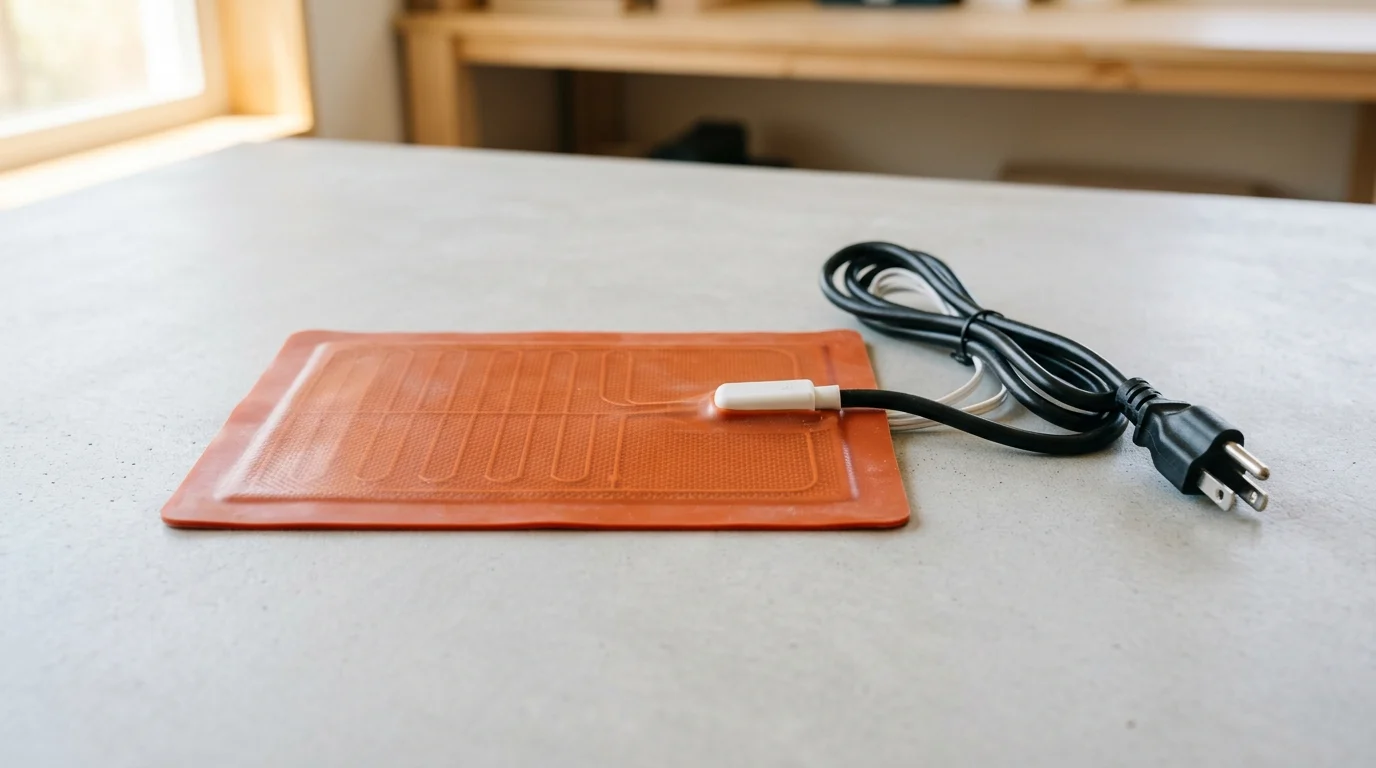
Why UL Certification Matters for Silicone Rubber Heaters
When discussing heating element sourcing with procurement teams, the conversation inevitably turns to safety standards. Cutting corners is not an option when dealing with components that routinely operate between 200°C and 250°C in demanding industrial environments. Meeting rigorous safety benchmarks is more than adding a logo to a spec sheet; it is the absolute baseline for satisfying channel partners and minimizing liability.
Prioritizing a Safety Heating Element with official recognition separates serious B2B distributors from unreliable operations. Here is exactly why this certification is non-negotiable for your supply chain.
Safety and liability benefits
A lack of proper certification can quickly derail a lucrative product line. If you are importing heating elements without recognized safety testing—such as compliance with UL 499 (the standard for electric heating appliances)—you are taking on massive liability. In the event of a product failure, uncertified components can void your commercial insurance policies and leave your business on the hook for damages.
Furthermore, major retail and industrial distributors simply will not stock your equipment if the internal components lack traceability. Having that recognized standard acts as a legal and commercial shield. It proves that the dielectric strength has been tested to withstand at least 1500V AC without breaking down, giving you and your buyers peace of mind.
Risk reduction in commercial applications
In commercial applications, risk reduction is everything. A thermal runaway event or a short circuit in a medical device, a food service warming tray, or an aerospace component can cause catastrophic equipment damage and costly downtime.
Certified heaters are manufactured with self-extinguishing materials. Sourcing a proper Flame Retardant Heater means the silicone rubber compound has passed rigorous flammability tests (like UL 94 V-0). This guarantees that even if an electrical fault occurs, the material will not sustain a flame, effectively containing the risk and protecting the broader commercial system.
Key Technical Specifications to Check
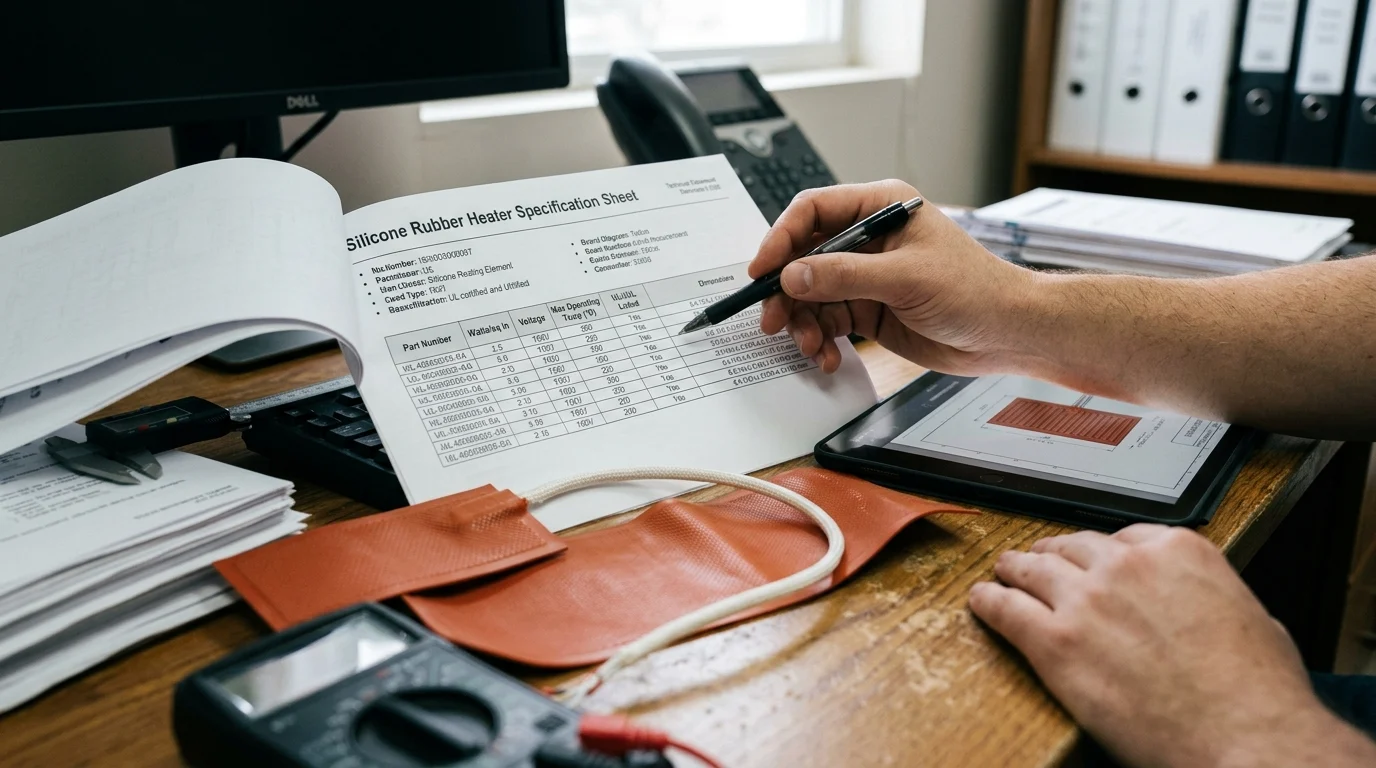
Once safety certifications are established, the next step is defining technical specifications. Not all silicone heaters are built the same; without precise performance metrics on your RFQ, comparing supplier quotes becomes difficult.
Look past marketing claims and focus strictly on engineering data. Here are the core specifications to verify before placing a bulk order.
Core performance requirements
The primary metric to evaluate is watt density. For a standard Silicone Rubber Heater, you generally want a watt density ranging from 0.1 to 0.8 W/cm², depending on whether the application requires gentle warming or rapid heat-up. Pushing the watt density beyond 0.8 W/cm² without proper heat sinking is a recipe for premature failure.
Thickness and flexibility must also be specified. A standard fiberglass-reinforced silicone heater is typically around 1.5mm thick. It should be flexible enough to wrap around a drum or pipe with a minimum bend radius of 1.5 inches without fracturing the internal heating elements.
Heater types and construction options
When building out a product line, there are two primary construction options: wire-wound or etched foil. Wire-wound heaters use resistance wire patterned in a specific layout, offering excellent physical durability and flexibility. They are highly recommended for applications requiring constant flexing or moving parts.
Conversely, etched foil heaters utilize a chemically etched metal circuit. They provide superior heat distribution and achieve a much thinner profile. For high-volume production runs where uniform surface temperature is critical, etched foil is generally the optimal choice, despite requiring a higher upfront tooling investment.
How to compare suppliers and products
Comparing suppliers requires evaluating how their specific heater constructions align with your budget and volume requirements. The following comparison table highlights which technology to source based on project parameters.
| Specification | Wire-Wound Construction | Etched Foil Construction |
|---|---|---|
| Optimal Watt Density | Up to 0.6 W/cm² | Up to 0.8 W/cm² |
| Minimum Thickness | ~1.5 mm | ~0.8 mm to 1.5 mm |
| Tooling Cost | Low / None ($0 – $50) | Moderate to High ($150 – $500) |
| Typical MOQ | Low (10 – 50 pcs) | Higher (100 – 500 pcs) |
| Best Application | Highly flexible, low volume | Flat surfaces, high volume |
Use these baselines when reviewing supplier quotes. If a factory quotes an etched foil design with zero tooling fee and an MOQ of 5 pieces, that is a signal to dig deeper—they might be taking shortcuts on the circuit design.
How to Verify UL Certification and Compliance
Trust, but verify. A logo on a supplier’s website does not guarantee the specific product you are purchasing is compliant. The B2B landscape often features exaggerated claims.
To protect your investment, a rigorous auditing process is essential. Here is how to verify that a UL Certified Heater is legitimate and built to specification.
Required certification documents
First, request the supplier’s official E-number (the UL file number). Enter this E-number directly into the UL Product iQ database. If the factory’s name and the specific component category do not appear, decline the partnership.
You also need to request the Certificate of Compliance (CoC) and the test reports for the specific raw materials they use. The silicone rubber, the fiberglass mesh, and the adhesive backing must all individually meet Industrial Safety Standards to ensure the final assembly is compliant.
Supplier quality and engineering review
Beyond paperwork, conduct a quality and engineering review of the supplier’s facility, either virtually or through a third-party auditor. Look for ISO 9001:2015 certification as a baseline for their quality management system.
During the review, ask about their testing protocols. A reliable manufacturer will perform 100% end-of-line testing for resistance tolerance (usually ±5% to ±10%) and high-voltage dielectric breakdown. If they only perform batch testing on a small sample size, their quality control is likely insufficient for critical applications.
Common compliance red flags
There are several glaring red flags to watch for. The most common is the ‘fake mark’—using a generic logo instead of the official recognized component mark (the backward ‘UR’). Another major red flag is when the components listed in the official file do not match the bill of materials (BOM) in your quote.
Watch out for unusually high defect rates during the sampling phase. If more than 1% to 2% of your samples fail a basic dielectric or resistance test, it means the supplier is struggling with process consistency, regardless of what their certificates say.
Sourcing, Pricing, and Delivery Considerations
Once specifications and compliance are locked in, the focus shifts to the business side of the agreement. Sourcing requires a commercial arrangement that protects margins and aligns with inventory cycles.
Here are the real-world figures to expect when negotiating orders, managing tooling costs, and establishing a reliable delivery schedule.
MOQ, sampling, tooling, and lead times
With reputable factories, Minimum Order Quantities (MOQs) vary based on the technology. For standard wire-wound heaters, MOQs can be as low as 50 pieces due to minimal setup. For etched foil, expect an MOQ of 200 to 500 pieces to absorb setup costs.
Tooling is another factor. Etched foil tooling typically runs between $150 and $400 depending on the complexity and cutouts. Lead times are generally quite stable in this industry: expect 10 to 15 days for initial custom samples, and about 3 to 4 weeks for bulk production runs once the sample is approved.
Pricing, margins, and private-label options
Pricing for certified heaters carries a premium—usually 15% to 20% higher than non-certified alternatives. However, this premium allows you to sell into higher-margin B2B channels like aerospace, medical devices, and heavy industry, where buyers will not even look at a product without compliance.
If you are a distributor, ask about private-label options. Many top-tier factories will vulcanize your company logo directly into the silicone or print custom part numbers on the surface. This helps lock in your aftermarket replacement sales, easily covering the initial certification premium.
RFQ to order workflow
To keep procurement organized, implement a structured RFQ-to-order workflow. A standardized schedule keeps suppliers accountable.
| Workflow Stage | Typical Timeline | Buyer Action Required |
|---|---|---|
| RFQ & Quoting | 2 – 4 Days | Provide 2D/3D CAD, watt density, and voltage specs. |
| Tooling & Sampling | 10 – 15 Days | Pay tooling fee; perform in-house testing on received samples. |
| Sample Approval | 3 – 5 Days | Sign off on the golden sample and finalize the BOM. |
| Bulk Production | 21 – 30 Days | Issue PO, pay 30% deposit, arrange 3rd-party inspection. |
| Shipping & Logistics | 15 – 35 Days | Clear customs; pay 70% balance against Bill of Lading. |
Sticking to a timeline like this prevents scope creep and ensures your inventory arrives right when your sales team needs it.
How to Make the Final Supplier Selection
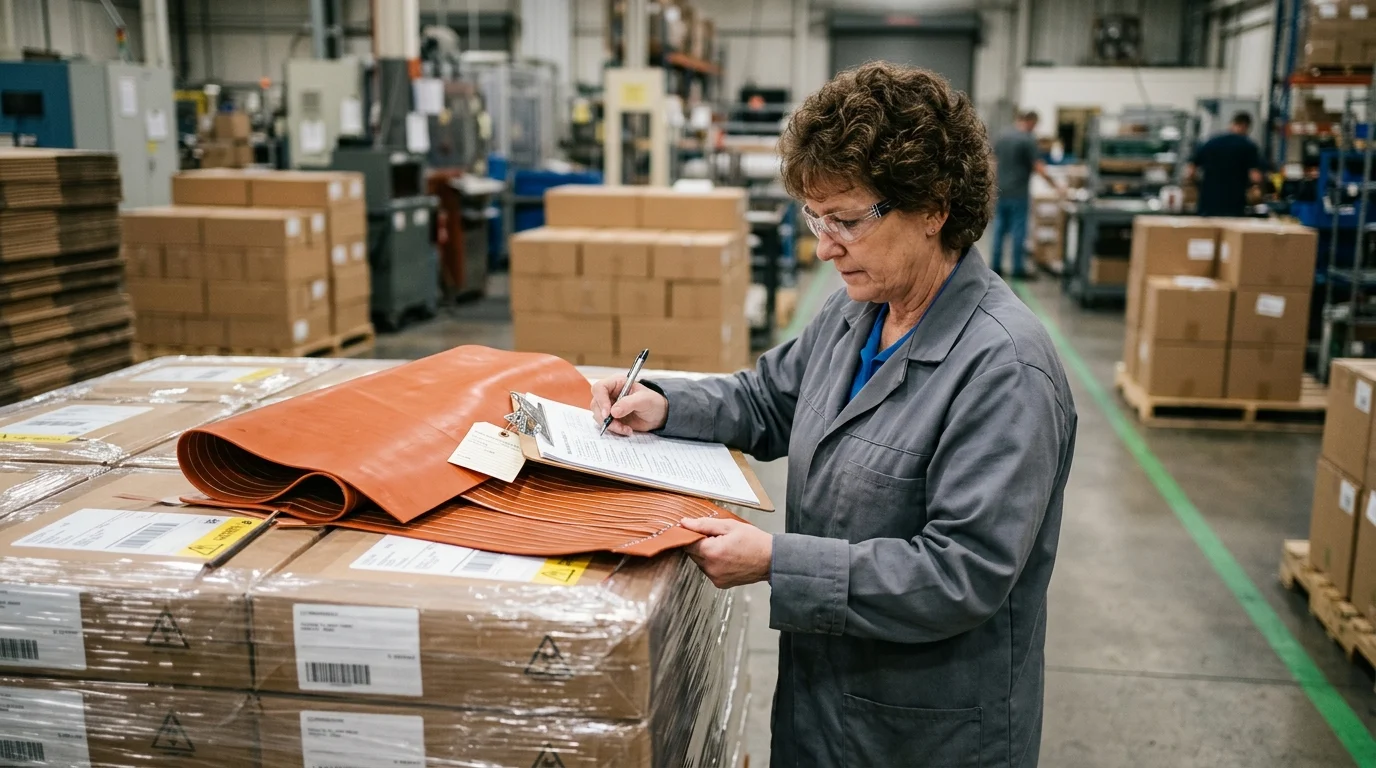
Having covered the technical, compliance, and commercial aspects, the final step is evaluating your shortlist of factories to make a decision.
Choosing a partner is not just about securing the lowest initial quote. It requires finding a manufacturer capable of scaling with your business over the next five to ten years without compromising quality.
Evaluation criteria for decision-making
When evaluating a final supplier, heavily weigh their operational footprint and export experience. For instance, factories located in established manufacturing hubs—like Shengzhou in Zhejiang Province—often benefit from deep local supply chains for raw materials and skilled labor. A company like Shengzhou Jinwei Electric Heating Appliance Co., Ltd. is a great example of an integrated R&D and production facility that has built a global footprint by serving over 2,000 cooperative customers across Europe, America, and Japan.
Defect rate commitments are also critical. Require suppliers to guarantee a defect rate of less than 0.5% in writing within the purchase agreement. Hesitation to commit to this metric often indicates a lack of confidence in their quality assurance processes.
Why long-term manufacturing capability matters
Long-term manufacturing capability is what ultimately protects your brand reputation. A great supplier does not just ship the product and disappear; they provide high-quality after-sales service and have the financial stability to weather supply chain disruptions.
As your business grows, you will inevitably face sudden spikes in volume or require fast-tracked engineering changes. A partner with a strong balance sheet, continuous R&D investment, and a proven track record of international export will be able to pivot and support you. That long-term reliability is the true ROI of a rigorous sourcing process.
Key Takeaways
- Wholesale sourcing and supply-chain implications for Silicone Rubber Heater
- Specifications, compliance, and commercial terms buyers should validate
- Actionable recommendations for distributors and procurement teams
Frequently Asked Questions
Why should I choose a UL-certified silicone rubber heater?
UL-certified heaters help reduce liability, support distributor approval, and confirm tested electrical safety such as dielectric strength for industrial use.
What watt density is suitable for a silicone rubber heater?
Most applications use 0.1 to 0.8 W/cm². Stay below 0.8 W/cm² unless the heater has proper heat sinking to avoid premature failure.
How do wire-wound and etched foil silicone heaters differ?
Wire-wound heaters suit flexible, low-volume projects. Etched foil heaters offer more uniform heating and thinner profiles, ideal for flat, high-volume applications.
What specifications should I confirm before ordering from Jingwei Heat?
Check UL-related certifications, watt density, thickness, bend radius, voltage, size tolerance, lead configuration, and whether the heater uses wire-wound or etched foil construction.
Can a silicone rubber heater be used in medical or food service equipment?
Yes, if it matches the application requirements. For safer use, specify UL-certified and flame-retardant materials, plus the correct temperature range and mounting method.
Post time: Apr-16-2026