


A defrost heater is the cheapest component in a refrigeration system and the one most likely to be argued about. Nearly every avoidable claim comes down to a specification that was never written down properly.
By Jake · Published 23 October 2026 · 15 min read · Last verified: 2026-10-23
TL;DR
- Specify defrost heaters by power per metre of tube, not by total watts, because the tube length follows the evaporator and the total wattage follows from it.
- Published power density for drain pan and unit cooler defrost tube runs at about 300 to 400 watts per metre, which is the figure to size against your coil rather than a catalogue wattage.
- Ingress rating is not optional on a part that lives in a wet enclosure, and the appropriate rating depends on whether the seal is a moulded end or a silicone head.
- Thermal protection has to be specified as part of the heater rather than assumed, because a heater without a cutout has no defined behaviour when it fails.
- Certification marks on a datasheet are a claim by the supplier, and the file number behind the mark is what makes it verifiable.
- Write the specification so that a different supplier could quote against it, because a specification only its author can read is not a specification.
Why defrost heater claims happen at all
Almost no defrost heater warranty claim is caused by a defective component; nearly all of them are caused by a specification that nobody wrote down, or wrote down in a way that could not be checked. That framing matters, because it changes where you look for the problem. If you assume the part was bad you will replace the part, install an identical part, and have the same conversation with the supplier six months later.
The five recurring causes are all specification failures.
- A heater matched on wattage but fitted at the wrong length. The wattage was right for a tube that reached the full width of the coil, and the tube supplied was shorter, so the far end of the evaporator never cleared.
- A seal type chosen for a dry location used in a wet one. The part is perfectly good and quietly collects water at the terminal until the insulation resistance fails.
- A heater with no thermal cutout fitted into a system that expected one. The system had no defined over-temperature behaviour, so when the thermostat failed the part had no agreed behaviour to be judged against.
- A drain pipe heater used for a drain pan duty, or the reverse. These are different parts with different constructions, and they are not interchangeable even where the wattage happens to match.
- A replacement fitted without the thermal fuse the original had. One 72 degree fuse, or two, is part of the safety architecture of the appliance and it is routinely dropped on a retrofit because nobody wrote it down.
Each of those is a line on a datasheet that was either absent or ambiguous. A specification only its author can read is not a specification, and the test for whether yours is adequate is simple: could a different supplier quote against it and produce something that would fit the same machine? If the answer is no, the claim is coming.
Size by power density, not by catalogue wattage
Specify a defrost heater as watts per metre of tube, not as a total wattage, because the tube length follows the evaporator and the total follows from it. This is the single change that makes a specification portable, and it is the change that eliminates the first of the five failure causes above.
For drain pan and unit cooler defrost tube, the published figure is 300 to 400 watts per metre. The procedure is therefore short. Measure the existing heater, including the portion that runs down into the drain, because that length is part of the duty and excluding it is a common error. Multiply the measured length by the power density appropriate to the application. That gives you a total wattage that is defensible on the machine in front of you rather than on someone else’s catalogue.
Two practical details make this reliable in practice. The first is that power density, not wattage, is the property that actually determines whether the coil clears, because it determines the surface energy the heater can deliver per unit length of coil, and a short tube with the same total wattage has a higher density and a hotter surface. The second is that quoting by density makes your enquiry comparable: two suppliers can quote the same job because they are answering the same question, rather than each quoting their nearest catalogue part and leaving you to work out which is bigger.
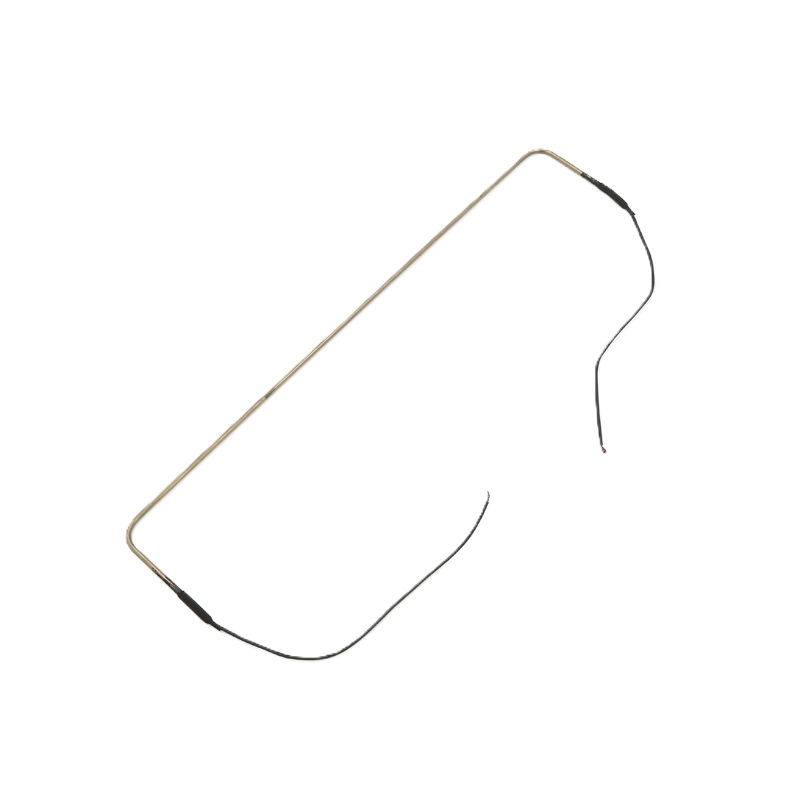
If you want the published dimensional and power data for this class of part rather than a general principle, the defrost heater wattage guide section carries the tube diameters, the shapes available, the lead lengths and the power densities across the range.
The material stack: three layers and the one that is overlooked
A tubular defrost heater is three components, and the third one is the one that gets bought on price and causes the failure.
The stack is a Cr20Ni80 nickel-chromium heating core, an insulating fill of high-density magnesium oxide, and a 304 stainless steel sheath, with 316 and 310S available where the environment is more aggressive, such as walk-in freezers and cold rooms running at high humidity and low temperature. The sheath is what touches the environment, so it is the layer that carries the corrosion requirement, and it is also the layer whose grade is frequently left unstated.
The magnesium oxide is the layer worth thinking about, because it is doing two jobs at once and the failure is invisible until it has happened. It provides electrical insulation between the core and the sheath, and it provides thermal conduction between them. A loosely filled tube conducts poorly, and the consequence is not a uniform cooler heater but local hot spots, because the same electrical power is being dissipated through a smaller effective conduction path. Hot spots are what crack a heater, and they are caused by fill density rather than by the metal. That is why insulation resistance of 100 megohms or above is the published figure we specify, and why a heater that passes a simple on-off check at the bench can still fail in service.
Beyond the three layers there are two published figures that belong on a commercial specification because they describe the whole assembly rather than the metal. Thermal conversion efficiency of at least 95 percent describes how much of the electrical input reaches the load rather than the air around it. And the V-0 flame rating under the UL 94 materials classification describes what the insulation does when it is exposed to a flame source, which matters because the heater sits inside an insulated cabinet with limited egress if something goes wrong.
Ingress rating and seal construction are one specification, not two
A defrost heater lives inside a humid enclosure where condensation runs down onto it, so the ingress rating is not a detail and the rating you can achieve depends on how the heater is sealed.
The rating system is the IEC ingress protection code, published by the International Electrotechnical Commission, where the first digit grades solid particle protection and the second grades water. A common claim on a datasheet is that a waterproof rating means the part can be washed down, and the rating is what makes that claim either meaningful or meaningless. IP65 is dust tight with protection against water jets. IP67 is dust tight with protection against temporary immersion. The difference between the two is the difference between a jet of water and a temporary dunk, which in a fridge interior swept by a washdown is a meaningful difference.
Published construction for this range gives IP65 as the standard rating and IP67 where the heater is finished with a silicone rubber seal head. Those are not two grades of the same part; they are two seal constructions with different behaviour, and the specification has to say which one it wants. A retrofit that specifies IP65 and receives a heater with a moulded terminal is fine. A retrofit that specifies nothing and receives whichever the factory had on the line is a claim waiting for the next washdown cycle.
| Parameter | Published value | What it prevents |
|---|---|---|
| Power density | 300 to 400 W per metre | Under-sizing against a coil, which leaves the far end of the evaporator iced over |
| Heating core | Cr20Ni80 nickel-chromium | Corrosion of the resistive element itself in a persistently damp enclosure |
| Sheath | 304 stainless steel, 316 and 310S available | External corrosion in high-humidity cold rooms and walk-in freezers |
| Insulation fill | High-density magnesium oxide | Local hot spots caused by poor thermal conduction through the fill |
| Thermal conversion efficiency | At least 95% | Energy delivered to the air rather than to the load |
| Insulation resistance | At least 100 MOhm at DC 500 V | Tracking and leakage to the sheath in a wet enclosure |
| Dielectric withstand in water | 2,000 V/min at normal water temperature | Seal failure at the terminal where water actually collects |
| Ingress protection | IP65 standard; IP67 with silicone rubber seal head | Water ingress at the terminations during washdown and condensation |
| Operating range | −40 to 200 degrees C | Cracking and ageing of the insulation across the duty cycle |
| Flame rating | V-0 under UL 94 | Flame propagation from the insulation inside an enclosed cabinet |
| Tube diameters | 6.5 mm, 8.0 mm, 10.7 mm | Matching the retaining clip and the fin slot in the existing installation |
| Lead wire | 800 mm standard; 200 to 300 mm connecting wire | Rewiring or re-terminating at installation |
| Thermal fuse | Two 72 degree fuses on specified configurations | Loss of over-temperature protection on a retrofit that omits it |
| Service life | At least 8,000 working hours | Unplanned replacement; a figure you can put in a maintenance schedule |
Thermal protection and the electrical framework around it
A heater with no defined over-temperature behaviour has no defined behaviour when it fails, and every warranty dispute about a defrost heater ultimately comes back to that sentence.
Thermal protection is published on this range as an optional feature rather than fitted by default, which is a perfectly reasonable manufacturing position and simultaneously one of the most common sources of disagreement on a retrofit. The specification therefore needs to say one of three things explicitly: that a cutout is included and at what trip temperature, that the heater depends on an existing system control, or that neither applies and the duty has been assessed as tolerant. What does not work is leaving it open, because an open item becomes an argument later.
The electrical framework a heater sits inside is worth naming because it is where the compliance obligation actually sits. In the United States, general electrical installation requirements are set out in 29 CFR 1910.303, and the broader electrical standard for the workplace is the whole of 29 CFR Part 1910 Subpart S. These are installation requirements for the equipment, not specifications for a heating element, and a heater that meets them is still a heater whose material and sealing have to be right. Where a listed or certified component route is required, UL Solutions is one of the certification bodies operating such programmes, and NFPA publishes the codes that installations are assessed against. None of these makes your heater compliant on its own.
The distinction that matters commercially. A certification mark printed on a datasheet is a claim by the supplier. The file number behind the mark is something a third party can verify against the certification body’s public directory. When your equipment requires a certified component, ask for the file number and the certified model designation exactly as the directory lists them, not for a written statement that the part is certified. The second is easy to obtain and settles nothing; the first is the thing that survives an audit.
Three parts, three duties: do not cross them over
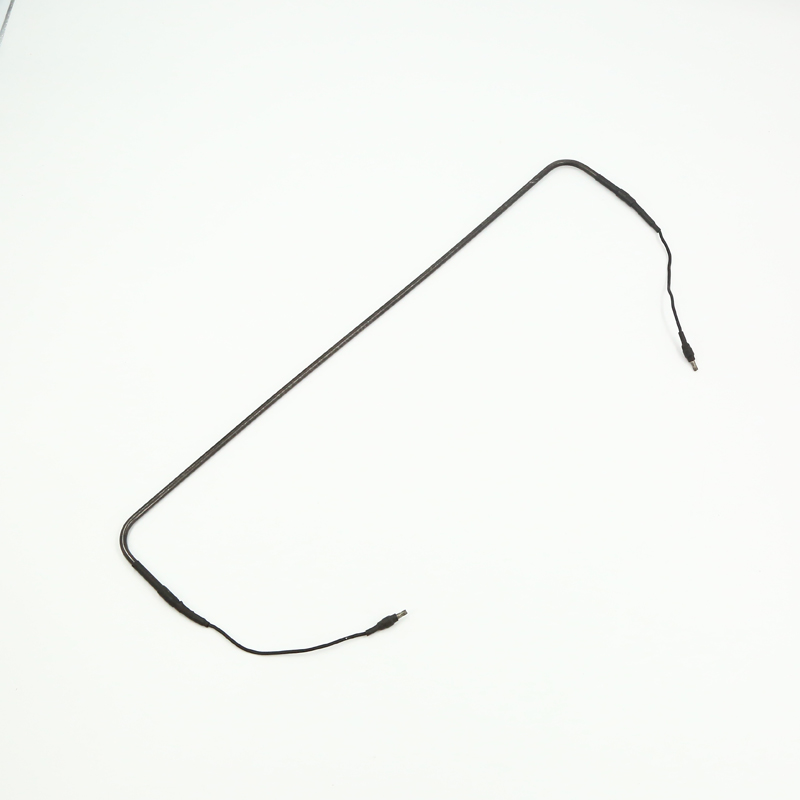
Evaporator, drain pipe and drain pan are different duties with different constructions, and the most expensive specification error in this category is treating them as the same part.
Our range is classified by installation position precisely because that is the selection key, and the three categories are not interchangeable.
- The evaporator defrost heater is the main defrost and the one most people mean when they say defrost heater. It is a rigid tube heater built from a Cr20Ni80 core, a 304 stainless steel sheath, magnesium oxide insulation and waterproof sealed terminals, and it mounts against the evaporator fins so that the heat is applied evenly across the coil face. This is the part that carries the published thermal efficiency and flame rating figures.
- The drain pipe defrost heater is a different object with a different job. It uses a nickel-chromium heating wire with glass fibre or silicone insulation and a self-adhesive backing, so it can be wrapped around a drain pipe. Its purpose is anti-freeze rather than main defrost: it keeps the drain from blocking with ice and it stops the water leaking out of the cabinet. It is flexible, small, and intended for a narrow space.
- The drain pan heater sits in the pan and often follows its shape, which is why U-shaped and L-shaped forms exist at all. Without it the pan refreezes and water spills out of the unit rather than running down to the drain.
Because these three are physically different, specifying the wrong one produces a part that fits, does not clear the fault it was bought to fix, and leaves the original problem in place. A heater that is working perfectly is still a warranty problem if it is the wrong heater.
Where the cost actually sits, and why we quote against inputs
The dominant cost in a defrost heater order is the material, and the second largest is usually the tooling required for a shape that is not standard. We deliberately do not attach figures to this article.
A price depends on heater type, length, wattage, voltage, sheath grade, seal construction, ingress rating, thermal protection, lead length, certification route and order quantity. Any number published without those twelve inputs is a number that stops being true the moment you substitute your own, and in a category this configuration-dependent a published price is more likely to mislead a buyer than help one. What we can do is give you the terms that decide it.
- Material length and grade. Linear in length, and the 316 or 310S sheath options carry a different material cost from the standard 304.
- Shape tooling. A straight tube is cheaper to make than a U, a bend or a double tube, and this is the term that quietly dominates a small order with a non-standard shape.
- Seal and terminal construction. Determines the achievable ingress rating and therefore whether a silicone-headed IP67 variant is needed at all.
- Certification route. Where your market requires a certified component, the certification file and any audit associated with it is a real cost line and not something to be discovered late.
- Order quantity against tooling. This is the term a buyer controls most effectively, and it is where negotiating on quantity is more productive than negotiating on unit price.
Our position is straightforward. Send us the length, the wattage, the voltage, the sheath grade, the ingress rating you need and your destination market, and we will quote against those inputs and tell you if the duty you have described actually calls for the heater you asked for. We would rather quote you the evaporator heater than the drain pipe heater if the evaporator heater is what your machine needs.
Where this guide has limits
No specification guide can tell you what your machine needs, and any guide that appears to is asking for a service call it cannot make. Several honest limits are worth stating.
First, the published service life of 8,000 working hours is a typical figure, not a guarantee. It changes with water chemistry in the drain, with how much corrosion the environment produces, and with how often the heater is actually cycled. It is useful for planning a replacement schedule and misleading as a promise.
Second, thermal conversion efficiency of at least 95 percent is measured on a bench in still air. A heater installed against a wet coil in a moving air stream will not deliver that figure into the frost, and a specification written as though it will is written badly.
Third, the ingress rating describes the heater as supplied, not as installed. A properly sealed heater with its lead terminated badly in the appliance is not an IP65 installation, and the datasheet cannot fix that.
Fourth, and most importantly, this article cannot tell you whether your machine needs a defrost heater at all. Some units are designed hot gas defrost and have no heater; some have one that is part of the evaporator assembly and is not separately replaceable. Establishing that comes before specifying anything.
A pre-order checklist for commercial defrost heaters
Eight items, confirmed before the enquiry is sent, remove most of the avoidable claims in this category.
- Which of the three duties the heater serves: evaporator, drain pipe or drain pan.
- The measured tube length, taken off the machine and including the run down into the drain.
- Power density applied to that length, rather than a catalogue wattage.
- Sheath grade, stated as a grade and not as “stainless”.
- Seal construction and the ingress rating that follows from it, specified together.
- Thermal protection: included at a stated trip temperature, dependent on an existing control, or assessed as not required.
- Lead wire length, connecting wire length, and the number and rating of any thermal fuse.
- The certification route required by your destination market, and the file number you will verify.
Getting a defrost heater specified against your machine
The fastest route to a useful quotation is to give us the application rather than the part. Our UL certified defrost heater range page carries the published electrical and material data referenced throughout this article, and the defrost heater wattage guide section carries the shapes, diameters and lead options across the full tube range.
Send us whatever you have, and partial information is genuinely useful to start with.
- Heater type and where it is installed: evaporator, drain pipe, drain pan or unit cooler.
- Length and wattage if known, or a photograph of the existing heater against a ruler.
- Voltage and supply arrangement in the appliance.
- Your destination market, so we can tell you which certification route applies.
- Any drawing you have, however rough.
If the duty turns out to be one we would specify differently, we will say so before you order rather than after.
Jake — to talk it through, contact JINGWEI for custom specs or email info@benoelectric.com.
Frequently asked questions
How much wattage does a defrost heater need?
Specify it as power per metre of tube rather than as a total wattage, because the tube length follows the evaporator and the total follows from it. For drain pan and unit cooler defrost tube the published figure is about 300 to 400 watts per metre. Multiply that by the measured tube length to get the total. Measuring the old heater including the portion that runs through the drain is the first step, because excluding that length is a common error and it is what produces a heater that fits the connector and never clears the far end of the coil.
What material should a commercial defrost heater be?
A nickel-chromium heating core inside a stainless steel sheath with magnesium oxide insulation between them. The common core grade is Cr20Ni80, the sheath is normally 304 stainless steel, and 316 or 310S are available for more aggressive environments such as walk-in freezers and cold rooms running at high humidity and low temperature. The magnesium oxide fill matters as much as either metal, because it provides both electrical insulation and thermal conduction, and a loosely filled tube conducts poorly and produces local hot spots. Insulation resistance of 100 megohms or above is the published figure we specify.
Does a defrost heater need a thermal cutout?
It should be specified, and the specification should say whether the cutout is included or whether the heater is designed to work with an existing control. A heater with no defined over-temperature behaviour has no defined behaviour when it fails, and that is exactly what a warranty dispute is fought over. Thermal protection is published on this range as an optional feature rather than fitted by default, which is a reasonable manufacturing position and a common source of disagreement on a retrofit. If your system relies on the thermostat to protect the heater, that dependency should be written into the specification rather than assumed.
What does IP65 or IP67 mean for a defrost heater?
It grades how well the enclosure resists solids and liquids under the IEC ingress protection code, where the first digit covers solid particles and the second covers water. IP65 is dust tight with protection against water jets; IP67 is dust tight with protection against temporary immersion. For a defrost heater this matters because the part lives inside a humid enclosure where condensation runs down onto it, and because it is often wired through a panel splashed during cleaning. The rating you can achieve depends on the seal construction: a moulded sealed terminal is commonly specified at IP65, while a heater finished with a silicone rubber seal head is available at IP67.
How long should a defrost heater last?
A published service life of 8,000 working hours is a reasonable expectation for this class of heater, and the figure is easier to reason about once expressed as a calendar period. An installation running one defrost cycle a day will reach it in well under two years; one on a short or infrequent cycle takes considerably longer. The more useful comparison is against how often you currently replace the heater, because the published figure is typical rather than guaranteed and local water chemistry, corrosion in the drain line, and cycling frequency all change it. What it does give you is a number to put in a planned maintenance schedule rather than reacting to failures.
Does certification matter, and how do I verify it?
It matters as soon as you sell the equipment into a market that requires it, and it matters for the appliance as a whole rather than for the heater alone. Our published parts carry CE and RoHS certification, and for North American markets the relevant route is a listed or certified component whose file number can be checked against the certification body rather than a mark printed on a datasheet. The distinction that matters commercially is that a mark on a datasheet is a supplier claim, whereas a file number is something a third party can verify. Ask for the file number and the certified model designation as the directory lists them, not for a written statement that the part is certified.
What causes a defrost heater warranty claim?
In practice it is almost always a mismatch between the specification and the installation rather than a defective part. The recurring causes are: a heater matched on wattage but fitted at the wrong length so it does not clear the coil; a seal type chosen for a dry location used in a wet one; a heater with no thermal cutout fitted into a system that expected one; a drain pipe heater used for a drain pan duty or the reverse; and a replacement fitted without a thermal fuse where the original had one. None of these are manufacturing faults, and all of them are preventable by a specification that states length, seal type, ingress rating, cutout provision and lead length explicitly.
What lead length and fuse do I need?
Both are specified per application rather than as a default, and both are routinely assumed. Published dimensions for double tube unit cooler defrost heaters give a connecting wire length of 250 or 300 mm with a standard lead wire length of 800 mm, and other configurations are supplied at about 200 to 300 mm. On the protective side, some refrigerator defrost heaters are supplied with two 72 degree thermal fuses, and on a retrofit the absence of the fuse the original had is a common and entirely avoidable discrepancy. When ordering a replacement, treat the number and rating of any thermal protection device as part of the specification rather than leaving it to the supplier’s default.
Can one defrost heater do all three jobs in a cabinet?
Not as a single part. A cabinet may well need an evaporator heater, a drain pipe heater and a drain pan heater, because the three serve different duties: the evaporator heater clears frost from the coil, the drain pipe heater keeps the drain from blocking with ice, and the drain pan heater stops the pan refreezing so water runs away instead of spilling out. They are physically different constructions, with the drain pipe heater being a flexible self-adhesive tape or wire and the pan heater being formed to follow the pan. Specifying one part for all three produces a part that fits, does not clear the fault it was bought to fix, and is still a warranty problem.
How much does a custom defrost heater add to lead time?
A standard configuration with a standard shape is the fastest route, and everything beyond that is a tooling question rather than a production question. A custom length, a custom bend, a double tube or a specific seal construction each require setup that a straight tube does not. Our workflow is: you send a drawing or a real photograph, we confirm the specification, free samples are sent for you to check quality, you place the order once the sample is confirmed, and our QC team checks the products before delivery. The specification confirmation step is the one worth insisting on, because a heater that is dimensionally close but not dimensionally correct will pass a visual check and fail in the cabinet.
About the author
Jake is Product Manager at JINGWEI, a manufacturer of electric heating elements including defrost heater tube, oven heating elements, finned heating elements, electric heating tubes, silicone rubber heaters such as heating pads, silicone heating belts, crankcase heaters and drain line heaters, aluminium foil heaters and aluminium heating plates.
The range spans the tube heaters used in commercial unit coolers, walk-in freezers and cold rooms through to the smaller ribbon and chip heaters used in domestic refrigeration, and the practical difference between those applications is usually where a specification question turns into a warranty question.
For a custom specification against your machine, contact JINGWEI for custom specs. The most useful first message includes the heater type, the length, the wattage if known, the voltage, and your destination market.
Post time: Oct-23-2026