


Why Crankcase Heater Specification Matters in Gulf Climate HVAC Systems
The Gulf climate region — Saudi Arabia, the United Arab Emirates, Qatar, Bahrain, Kuwait, and Oman — presents HVAC specification conditions that differ from typical North American or European HVAC installations. Summer ambient temperatures regularly exceed 45°C, humidity levels run high along the coastal corridor, and condensing units operate continuously through extended cooling seasons. The intuition that crankcase heaters are unnecessary in such hot climates is wrong, and understanding the actual failure mode they protect against is the starting point for correct specification.
Crankcase heaters do not protect against ambient cold conditions. They protect against refrigerant migration into the compressor oil during system off-cycle periods. When the HVAC system is off, refrigerant vapor inside the condenser and refrigerant lines can condense and migrate to the lowest-temperature point in the system. In most split-system and packaged-unit configurations, that lowest-temperature point is the compressor crankcase itself. Liquid refrigerant that accumulates in the crankcase mixes with the oil and reduces oil viscosity. On the next compressor start, the refrigerant-oil mixture produces liquid slugging at the compressor valves, which causes mechanical damage to the valves and motor windings over repeated events.
The Gulf climate failure path is the same as the temperate climate failure path: the system goes off-cycle, refrigerant migrates, and the next cold-start compresses liquid. What differs is the off-cycle duration pattern. In Gulf climate HVAC operations, summer cycling between partial-load and full-load operation produces shorter but more frequent off-cycle windows. Year-round operation in commercial buildings with extended weekend shutdowns or scheduled maintenance produces longer off-cycle periods. The crankcase heater must maintain the compressor crankcase at a temperature above the refrigerant saturation point throughout the off-cycle window, and the watt density must be sufficient to do so against the ambient cooling load.
For Gulf climate HVAC contractors, the four critical specifications are wattage sizing against compressor model, refrigerant type compatibility, silicone rubber construction selection, and cold-start protection envelope verification. This article maps each specification against the engineering considerations that determine the correct value for the specific condensing unit and operating pattern.
Specification 1: Crankcase Heater Wattage Sizing by Compressor Model
Crankcase heater wattage is not an independent specification. It is sized to the compressor model, the refrigerant used, and the expected off-cycle cooling load. Compressor manufacturers publish crankcase heater wattage tables that match specific heater wattages to specific compressor models, and HVAC contractors typically follow that table rather than sizing the heater independently.
The wattage selection logic follows from the heat balance around the compressor crankcase during the off-cycle window. The heater must add enough heat to offset the cooling load through the compressor shell, the mounting feet, and the refrigerant piping connections, so that the crankcase temperature stays above the refrigerant saturation temperature. If the wattage is too low, the crankcase cools below the saturation temperature and refrigerant condenses into the oil sump. If the wattage is too high, the heater wastes energy and may exceed the silicone rubber substrate’s maximum continuous operating temperature, as referenced in HVAC component engineering guidance.
For Gulf climate HVAC installations, the compressor manufacturer’s wattage table typically accounts for the higher ambient temperature through a base specification sized for tropical climate operation. Some compressor manufacturers publish separate wattage tables for tropical versus temperate climate operation, and the tropical table applies directly to Gulf climate condensing units. HVAC contractors specifying crankcase heaters for Gulf climate installations should confirm that the compressor manufacturer’s wattage table used is the tropical climate variant, since temperate climate wattage tables undersize the heater for desert ambient conditions.
The wattage specification review also includes the lead-wire termination and electrical connection format. Common crankcase heater terminations are stripped leads for field connection, spade terminals for quick-connect installation, and pre-installed plugs matched to specific compressor model wiring harnesses. The termination specification affects installation time on the OEM assembly line or service replacement operation, and the lead-wire insulation rating must match the voltage and ambient temperature class of the condensing unit location.
Specification 2: Refrigerant Compatibility and Saturation Temperature Envelope
Refrigerant type determines the saturation temperature envelope that the crankcase heater must maintain during the off-cycle window. Each refrigerant has a pressure-temperature relationship, and the crankcase heater must hold the crankcase temperature above the saturation temperature at the refrigerant’s condensing pressure during the off-cycle cooling period.
R410A, the dominant residential and light commercial HVAC refrigerant for several decades, has a condensing pressure that produces saturation temperatures in a range documented in ASHRAE refrigeration resources for split-system operation. R32, increasingly adopted as a lower-GWP alternative to R410A, has a similar saturation temperature profile but slightly different pressure-temperature relationships that affect the heater sizing margin. R454B and R452B, the newest lower-GWP refrigerant options, introduce different saturation profiles that the compressor manufacturer’s wattage tables account for in their latest revisions.
The crankcase heater wattage selection against the refrigerant envelope typically follows a conservative engineering margin: the heater holds the crankcase 5 to 10°C above the refrigerant saturation temperature at the expected off-cycle condensing pressure. The margin accommodates variation in the actual condensing pressure during the off-cycle window as outdoor temperature falls, and the margin protects against the worst-case scenario where the saturation temperature rises to the upper end of the expected pressure range.
For Gulf climate HVAC installations, the typical off-cycle condensing pressure profile differs from temperate climate operation. With higher ambient temperatures and longer cooling seasons, the condensing pressure profile through the off-cycle window tends to track the high-end of the expected envelope, which produces a higher saturation temperature target for the heater. The conservative margin logic described above applies, but the target temperature rises accordingly.
Specification 3: Silicone Rubber Construction vs Cartridge Construction
Crankcase heaters in HVAC service come in two principal constructions: silicone rubber wrap-around heaters and insertion cartridge heaters. The two constructions differ in installation interface, dimensional compatibility, and service replacement pattern. For Gulf climate HVAC contractors, the construction choice typically follows the compressor manufacturer’s design intent rather than an independent specification decision.
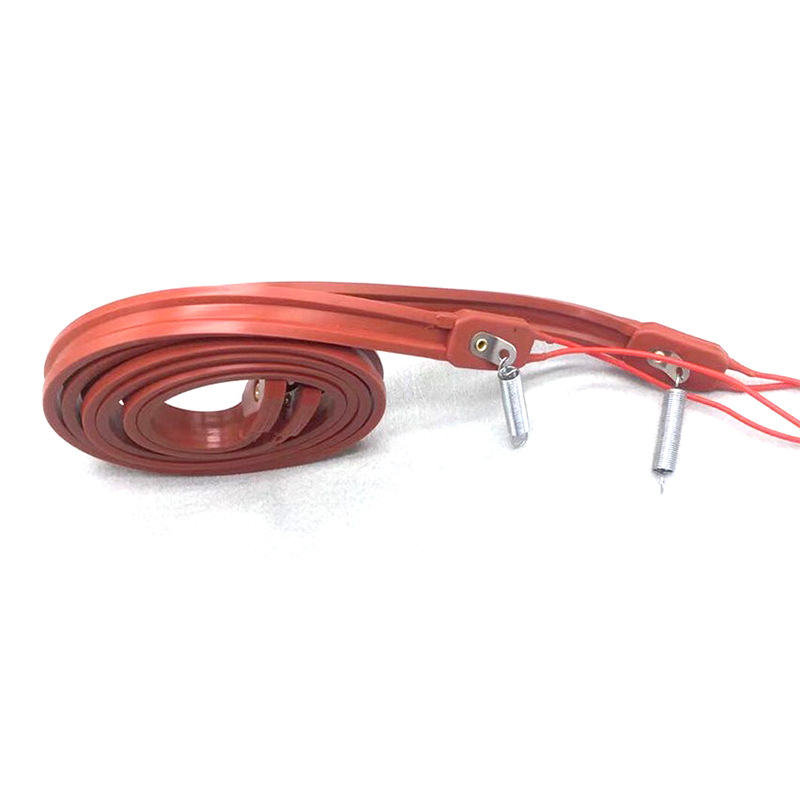
Silicone rubber crankcase heaters are flexible heating pads that wrap around the compressor crankcase surface and bond directly to the housing using the silicone rubber substrate as the mounting interface. The flexible construction conforms to non-cylindrical compressor shapes — including hermetic scroll compressors with non-symmetric housings, semi-hermetic reciprocating compressors with rectangular crankcase profiles, and rotary compressors with various housing geometries. The wrap-around installation does not require disassembly of the compressor housing and can be added to the assembly without modifying the compressor structure.
Cartridge crankcase heaters insert into a machined well that the compressor manufacturer incorporates into the crankcase housing during casting. The cartridge construction concentrates the heat transfer interface in a small area of the crankcase rather than distributing it across the housing surface, and the receiver well design is part of the compressor’s engineering specification. Cartridge construction is more common in service replacement of compressors originally designed with a cartridge well, where the OEM compressor design predates the broad adoption of silicone rubber construction.
For OEM assembly operations producing new condensing units, silicone rubber construction is the dominant choice because of the installation simplicity and the elimination of the machined receiver well requirement in the compressor housing. For service replacement scenarios where the compressor was originally designed for a cartridge well, the replacement heater must match the cartridge format even if silicone rubber construction is technically available.
Jingwei’s silicone rubber heater product family includes crankcase heater configurations within the broader silicone rubber heater line. Wattage rating, dimensional fit, lead-wire termination, and adhesive mounting configuration are confirmed per part number during the RFQ stage, and our sales team reviews the dimensional drawing against the compressor model specified by the HVAC contractor.
Specification 4: Cold-Start Protection Envelope and Service Life Verification
Cold-start protection envelope verification is the engineering review that confirms the crankcase heater specification actually delivers the protection the compressor manufacturer expects. The envelope covers watt density limits, maximum continuous operating temperature, adhesive bond performance at elevated temperature, and lead-wire insulation rating at the upper end of the temperature class.
Watt density is the power output per unit area of the silicone rubber substrate, and the watt density limit depends on the maximum continuous operating temperature of the silicone rubber compound. Higher watt densities produce higher substrate temperatures and reduce the service life at continuous operation. The compressor manufacturer’s published watt density limit for the specific compressor model sets the upper bound for the heater specification.
Maximum continuous operating temperature is the substrate temperature above which the silicone rubber material begins to degrade at an accelerated rate. The temperature rating class affects both the upper watt density limit and the projected service life at desert ambient conditions. Silicone rubber crankcase heater temperature ratings are typically specified in classes documented in the heater manufacturer’s product data sheet, and the rating class affects the warranty scope rather than the functional specification alone.
Adhesive bond performance at elevated temperature is the third element of the envelope review. The silicone rubber substrate bonds to the compressor crankcase through an adhesive layer that must maintain bond strength across the operating temperature range. Adhesive selection varies with the expected service temperature, and the bond performance verification is typically documented by the heater manufacturer as part of the engineering specification review.
Lead-wire insulation rating is the fourth element. The lead-wire insulation temperature class determines the maximum operating temperature the lead wire tolerates before insulation degradation begins. For Gulf climate installations, the lead-wire insulation rating must accommodate both the substrate temperature and the ambient temperature contribution, and the rating class is typically 180°C or 200°C silicone rubber lead wire for desert climate operation.
Gulf Climate Installation Considerations Beyond the Four Specifications
The four specifications above define the heater specification, but the broader Gulf climate HVAC installation considerations affect the heater specification indirectly. Condensing unit location relative to direct sun exposure, condensing unit enclosure ventilation, refrigerant line routing, and electrical supply quality all influence the operating envelope the crankcase heater experiences.
Condensing units installed in direct sun exposure experience higher ambient cooling load on the crankcase heater than condensing units installed in shaded locations with through-ventilation. The ambient cooling load difference shifts the watt density requirement, but the compressor manufacturer’s tropical climate wattage table typically already accounts for direct sun exposure in its base specification. Condensing unit enclosures with restricted ventilation experience higher internal ambient temperatures that further elevate the cooling load, and the enclosure design affects both the heater specification and the broader compressor protection specification.
Refrigerant line routing affects the refrigerant migration path during the off-cycle window. Long refrigerant lines between the condensing unit and the indoor evaporator coil provide additional refrigerant hold-up volume that can migrate to the crankcase during the off-cycle window. The crankcase heater specification assumes the standard refrigerant line length documented in the compressor manufacturer’s installation manual, and installations with extended refrigerant line lengths may require adjustment of the heater wattage to maintain the crankcase temperature margin.
Electrical supply quality in some Gulf region installations produces voltage variation that affects the crankcase heater output. Under-voltage operation reduces the heater wattage proportionally to the voltage squared, which can push the crankcase below the saturation temperature margin. Voltage regulation specifications in the condensing unit design protect against this failure mode, and the crankcase heater specification assumes nominal voltage operation as documented in the compressor manufacturer’s installation documentation.
Sourcing Crankcase Heaters from a Single Silicone Rubber Heater Supplier
HVAC contractor procurement teams that source multiple silicone rubber heating products for the same condensing unit — including silicone rubber crankcase heaters, drain line heaters, and heating pads for auxiliary components — can consolidate the supplier qualification to a single manufacturer producing the silicone rubber heater product family. The consolidation simplifies the supplier audit, the incoming inspection process, and the field service parts inventory.
Jingwei produces silicone rubber heaters covering crankcase heater, drain line heater, heating pad, and silicone heating belt configurations within the same product family. Wattage rating, voltage, dimensional fit, lead-wire termination, and adhesive mounting configuration are confirmed per part number during the RFQ stage, and our engineering team reviews the dimensional drawing against the compressor or component model specified by the HVAC contractor.
For HVAC contractors specifying crankcase heaters for multiple condensing unit models, the per-model part number documentation covers wattage, dimensional, and electrical specifications for each compressor model. The cross-model documentation review during the supplier qualification stage confirms that all condensing unit models in the product line have corresponding heater specifications available, and the supplier’s documentation cycle supports the OEM’s part-number change management process as compressor models are added or revised.
Frequently Asked Questions
Why do Middle East HVAC systems require crankcase heaters despite the high ambient temperature?
Middle East HVAC systems operate in desert climate zones where summer ambient temperatures regularly exceed 45°C, but crankcase heater specification is still required for cold-start protection during winter morning starts, off-cycle cooling periods, and partial-load shutdown conditions. The heater maintains the compressor oil temperature above the refrigerant saturation point to prevent refrigerant migration into the oil during downtime, which would otherwise cause liquid slugging at the next compressor start. The specification logic is protection against start-up risk, not against ambient cold conditions.
What is the typical crankcase heater wattage specification for Gulf climate HVAC condensing units?
Crankcase heater wattage is sized to the compressor horsepower and refrigerant type, with Gulf climate HVAC condensing units typically specified in the range documented by compressor manufacturers for tropical climate operation. The exact watt density depends on the compressor model, the refrigerant used, and the expected compressor off-cycle duration. HVAC contractors typically follow the compressor manufacturer’s published crankcase heater wattage table rather than sizing the heater independently from the compressor specification.
What is the difference between silicone rubber and cartridge crankcase heaters for HVAC applications?
Silicone rubber crankcase heaters are flexible, wrap-around heating pads that bond directly to the compressor crankcase surface using the silicone rubber substrate as the mounting interface. They conform to non-cylindrical compressor shapes and install without disassembly of the compressor housing. Cartridge crankcase heaters insert into a machined well in the compressor crankcase and require a specifically designed receiver in the housing. Silicone rubber construction is more common in OEM assembly because of the installation simplicity, while cartridge construction is more common in service replacement of compressors originally designed for cartridge wells.
How does silicone rubber crankcase heater temperature rating affect Gulf climate service life?
Silicone rubber crankcase heaters have a maximum continuous operating temperature rating that affects both the upper watt density limit and the service life at desert ambient conditions. The temperature rating determines the safety margin around the maximum operating envelope, and the service life in Gulf climate installation depends on the cumulative time spent at elevated temperatures rather than ambient temperature exposure alone. Specifications should confirm the temperature rating class against the compressor manufacturer’s heater envelope.
What refrigerant migration failure modes do crankcase heaters prevent in Middle East HVAC installations?
Crankcase heaters prevent refrigerant migration into the compressor oil during system off-cycle periods. When the system is off, refrigerant vapor inside the condenser and refrigerant lines can condense and migrate to the lowest-temperature point in the system, which is typically the compressor crankcase. The accumulated liquid refrigerant mixes with the oil and reduces oil viscosity. On the next compressor start, the mixture produces liquid slugging that can damage the compressor valves or motor windings. The crankcase heater maintains the crankcase temperature above the refrigerant saturation temperature, which keeps the refrigerant in vapor form and out of the oil sump.
Can Jingwei supply silicone rubber crankcase heaters to Middle East HVAC OEMs with custom wattage ratings?
Yes. Shengzhou Jingwei Electric Heating Appliance produces silicone rubber crankcase heaters in the silicone rubber heater product family. Wattage rating, voltage, lead-wire termination, and dimensional fit are confirmed per part number during the RFQ stage. The silicone rubber substrate accommodates non-standard compressor shapes and wattage ratings that match the compressor manufacturer’s published heater specification for the specific HVAC condensing unit model. Our sales team reviews the watt density envelope and the compressor dimensions during the quotation stage.
Procurement Action Steps
HVAC contractor procurement teams specifying crankcase heaters for Gulf climate installations should follow a five-step review. First, confirm the compressor model and refrigerant type against the compressor manufacturer’s published specification. Second, request the compressor manufacturer’s tropical climate crankcase heater wattage table for the specific compressor model. Third, identify the silicone rubber or cartridge construction that matches the compressor housing design. Fourth, request watt density, voltage, dimensional, lead-wire termination, and certification documentation from the heater supplier’s engineering team. Fifth, confirm the cold-start protection envelope against the compressor manufacturer’s published heater specification envelope.
For HVAC contractors specifying crankcase heaters across multiple condensing unit models, consolidating the silicone rubber heater supply to a manufacturer experienced across the broader product family — such as Jingwei’s production of silicone rubber heating pads, drain line heaters, and crankcase heaters within the same product line — minimizes supplier qualification overhead while preserving the compressor-specific part number documentation. Cross-construction sourcing decisions remain per compressor model, but the supplier qualification remains consolidated.
External references consulted for this article include the ASHRAE refrigeration resources for compressor protection and refrigerant migration failure analysis, the IEC standards library for HVAC component safety certification requirements, and the U.S. Department of Energy HVAC resource center for HVAC component specification guidance applicable to Gulf climate installation patterns.
Post time: Jul-15-2026