


Introduction
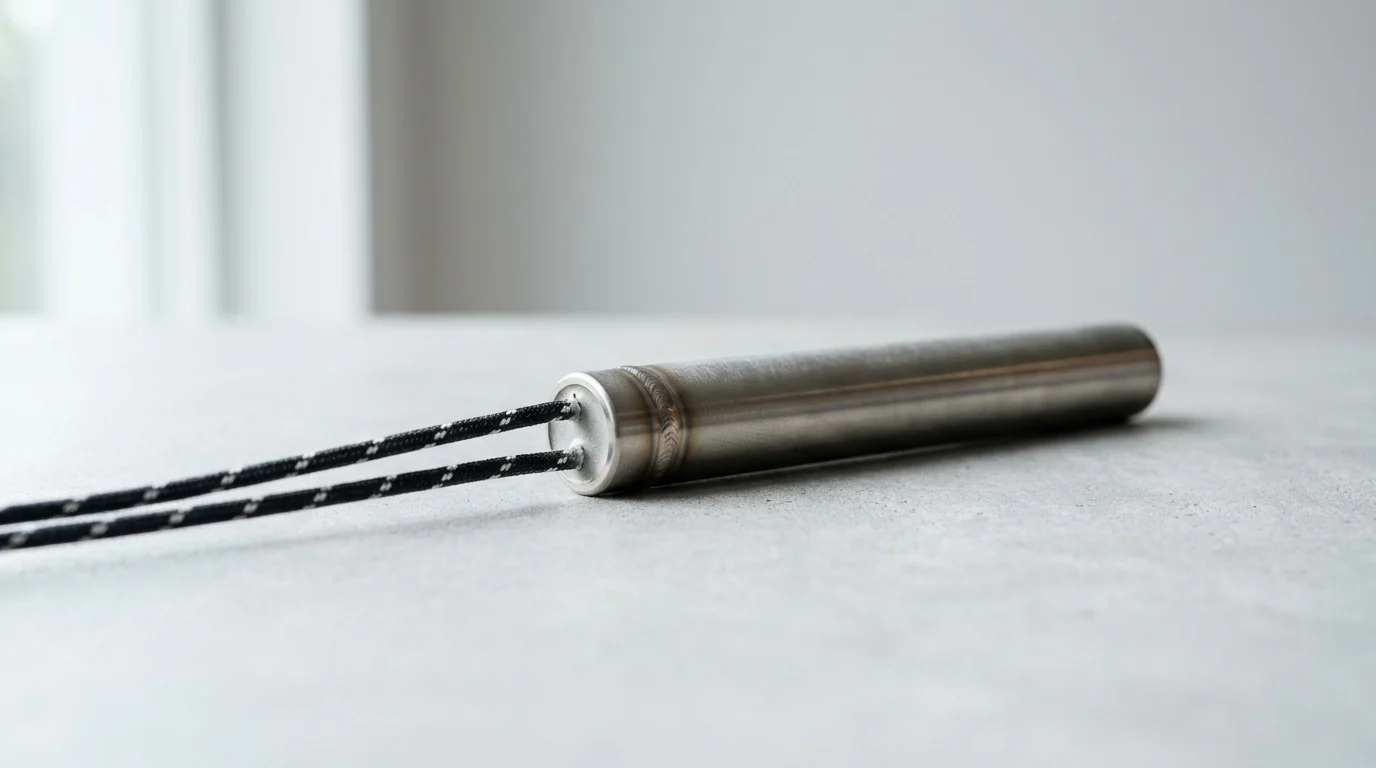
Heavy machinery operates under high loads, vibration, contamination, and constant thermal cycling, so the heating tube inside the system has to do far more than simply reach a target temperature. A custom solution can improve heat distribution, fit complex equipment layouts, reduce premature failure, and support tighter process control in applications such as presses, washers, tanks, and asphalt equipment. This article explains why tailored heating tube design matters, which operating conditions and specifications need to be defined first, and how the right material, shape, watt density, and mounting approach can help manufacturers improve uptime, safety, and long-term operating efficiency.
Why a Custom Heating Tube Strategy Matters
Experience with heavy machinery shows that off-the-shelf heating elements rarely cut it when pushing equipment to its limits. When discussing thermal management in asphalt plants, large-scale extrusion presses, or industrial parts washers, a custom Heavy Duty Heating Tube isn’t just a luxury; it is a baseline requirement for avoiding catastrophic downtime. Standard parts simply aren’t built to handle the constant thermal cycling and mechanical shock these machines dish out every single day. Custom bends and specialized formations also ensure that heat is distributed exactly where the process needs it, rather than just where a straight generic tube happens to fit.
Define Requirements
Before placing an order, it is crucial to determine exactly what your system demands. Engineering teams must look beyond just the target operating temperature. Are you dealing with high-vibration environments? Corrosive chemicals? High-pressure vessels? For instance, if your machinery operates continuously at 800°C (1472°F) under constant mechanical shock, a standard off-the-shelf heater will likely fail from internal wire breakage within 500 hours. You need to map out voltage constraints, physical space limitations, and the specific medium being heated—whether that is viscous hydraulic oil, deionized water, or forced air. You should also define the required cold zones so that the heated section doesn’t inadvertently melt sensitive seals or wiring near the mounting point.
Compare Performance and Cost Trade-offs
It is easy to experience sticker shock when first evaluating custom engineering costs, but analyzing the total cost of ownership is essential. A standard heater might cost $50 upfront, but if it fails every three months and causes a $5,000 production halt while the maintenance crew tears the machine apart, it is a terrible investment. Custom tubes might run $150 to $300 per unit depending on the Minimum Order Quantity (MOQ)—which often sits around 50 to 100 units for specialized production runs—but they can easily extend the lifecycle to 10,000+ hours. That translates to massive savings on maintenance labor and machine uptime over a five-year lifecycle. Paying a little more upfront for thicker sheathing or higher-grade resistance wire is almost always worth the initial expense.
Evaluate Heating Tube Design, Materials, and Compliance
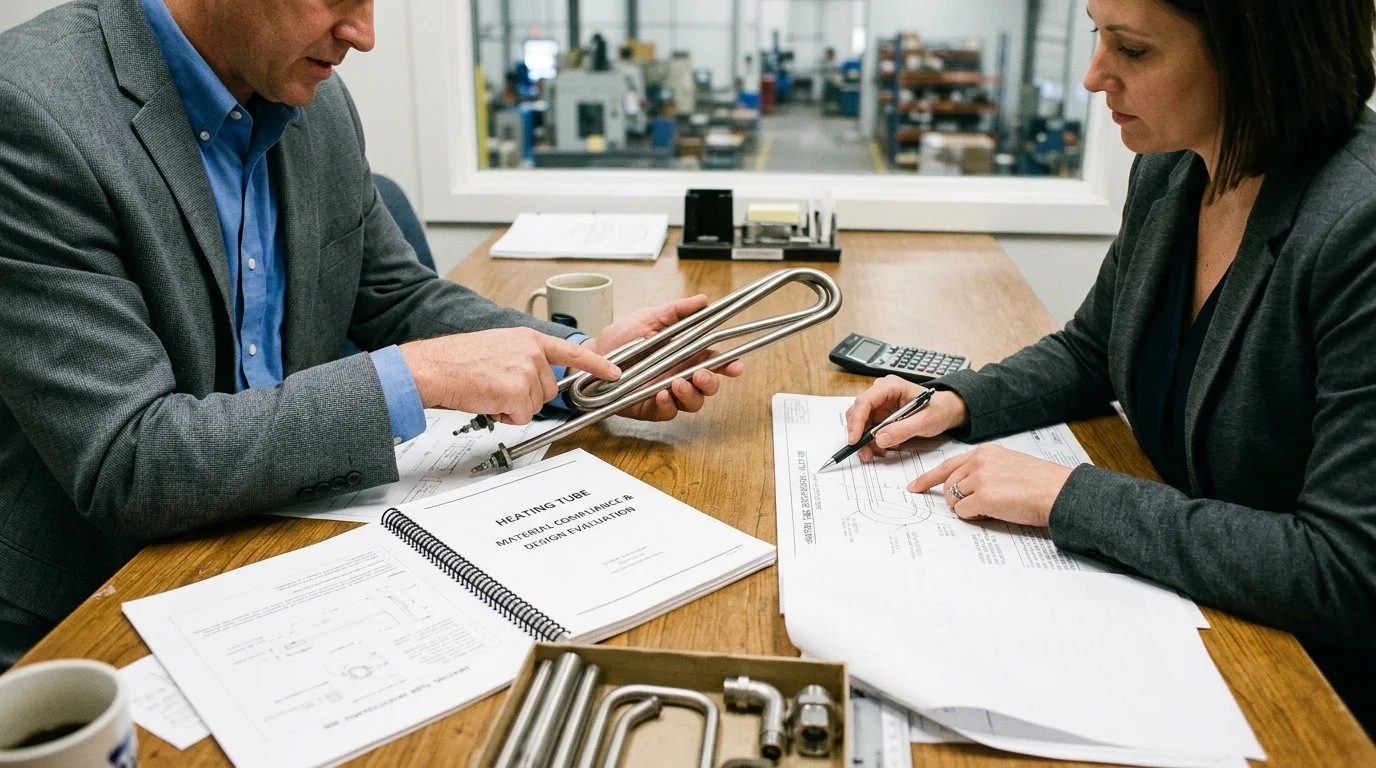
Once the need for a bespoke solution is established, the next step is diving into the engineering of the Industrial Heating Tube. Perfectly good heavy machinery can fail in the field simply because the wrong sheath material was specified or the surface watt density was miscalculated. Getting the physics right before moving to production is critical.
Compare Sheath Materials, Watt Density, and Insulation
Getting the watt density right is absolutely crucial. Pushing 50 watts per square inch (W/in²) into a heavy oil application will coke the oil, ruin the fluid, and burn out the element. Heavy oils usually need a very low watt density, around 10 to 15 W/in², whereas flowing water can easily handle 45 to 60 W/in². Insulation is another hidden factor; specifying high-purity Magnesium Oxide (MgO) powder and ensuring it is heavily compacted is highly recommended. This guarantees maximum thermal conductivity while preventing internal electrical shorts. Sheath wall thickness is also important—stepping up from a standard 0.035-inch wall to a 0.065-inch wall can drastically improve lifespan in abrasive environments. Here is a breakdown of recommended sheath materials based on the operating environment:
| Sheath Material | Max Temp (°C) | Best Application | Typical Watt Density Limit |
|---|---|---|---|
| Incoloy 800 | 870°C | High-temp air, corrosive fluids | ~40 W/in² (air) |
| 316 Stainless Steel | 650°C | Corrosive liquids, food grade | ~45 W/in² (water) |
| 304 Stainless Steel | 650°C | General purpose, clean water | ~50 W/in² (water) |
| Copper | 175°C | Clean water, low-temp oils | ~60 W/in² (water) |
Check Compliance and Application Fit
Compliance paperwork and testing cannot be ignored, especially for machinery shipping globally. It is vital to verify that a Custom Heating Tube meets CE, UL, or CSA standards depending on the destination market. For example, when building equipment for the European market, meeting the EN 60335 standard for electrical safety is non-negotiable. Furthermore, dielectric strength tests should demonstrate that the tube can withstand at least 1500V AC for one minute without any electrical breakdown. Leakage current should also be kept strictly under 0.5mA. Ensuring these compliance benchmarks are met during the prototyping phase prevents costly redesigns and compliance failures when the machine is ready to ship.
Source the Right Custom Heating Tube Supplier
Finding an Industrial Heater Manufacturer that understands the brutal realities of heavy machinery is half the battle. The best partners act as engineering extensions of your own team, rather than simply pushing standard catalog items.
Prepare a Clear RFQ
When sending out a Request for Quote (RFQ), leave absolutely zero room for assumptions. The RFQ needs to detail the exact wattage, voltage (e.g., 240V, or 480V 3-phase), cold zone lengths, and specific termination types like heavy-duty threaded studs or moisture-resistant lead wires. Providing detailed CAD drawings upfront eliminates unnecessary back-and-forth communication. Explicitly state the required defect rate—aiming for less than 0.5% on bulk orders is standard—and request their testing protocols, such as X-ray inspection of the welds. Do not forget to ask for lead times; a capable supplier should be able to turn around a custom prototype in 2 to 3 weeks, with full production runs taking about 4 to 6 weeks. Asking for a generic quote will only result in wild variations in both price and build quality.
Choose Between Standard and Custom Options
Ultimately, you must make a tough call on whether a slightly modified standard part will do the job or if a fully custom solution is required.
Key Takeaways
- The most important conclusions and rationale for Heating Tube
- Specs, compliance, and risk checks worth validating before you commit
- Practical next steps and caveats readers can apply immediately
Frequently Asked Questions
Why choose a custom heating tube instead of a standard one?
Custom tubes match your machinery’s voltage, shape, medium, and shock load, reducing premature failure and downtime. For heavy-duty equipment, they usually deliver far better lifecycle value than generic replacements.
What information should I prepare before requesting a quote from Jingwei Heat?
Provide operating temperature, voltage, wattage, medium, installation space, sheath material preference, bend shape, cold zone needs, and working conditions like vibration, pressure, or corrosion.
How do I select the right sheath material for a heating tube?
Match material to temperature and medium: Incoloy 800 for high heat, 316 stainless for corrosive liquids, 304 stainless for general use, and copper for clean low-temperature water applications.
Why is watt density important for heavy machinery heating tubes?
Watt density affects heat transfer and element life. Too high can coke oil, damage fluid, or burn out the tube. Heavy oils usually need lower watt density than flowing water or air.
Can Jingwei Heat support custom heavy-duty heating tube production for OEMs?
Yes. Jingwei Heat provides custom industrial heating tube solutions, including tailored dimensions, materials, and configurations for heavy machinery manufacturers and repeat production projects.
Post time: May-26-2026