


Aluminum foil heater pads have become the top choice for refrigerator defrosting, replacing traditional tubular heaters (stainless steel/aluminum tubes). The core reasons lie in aluminum foil heater’s ultra-thin flexibility, perfect fit, high thermal efficiency, rapid heating, energy saving, easy installation, low cost and stable service life—all of which perfectly adapt to the complex structure of refrigerator evaporators and the harsh high-humidity, low-temperature working environment inside refrigerators.
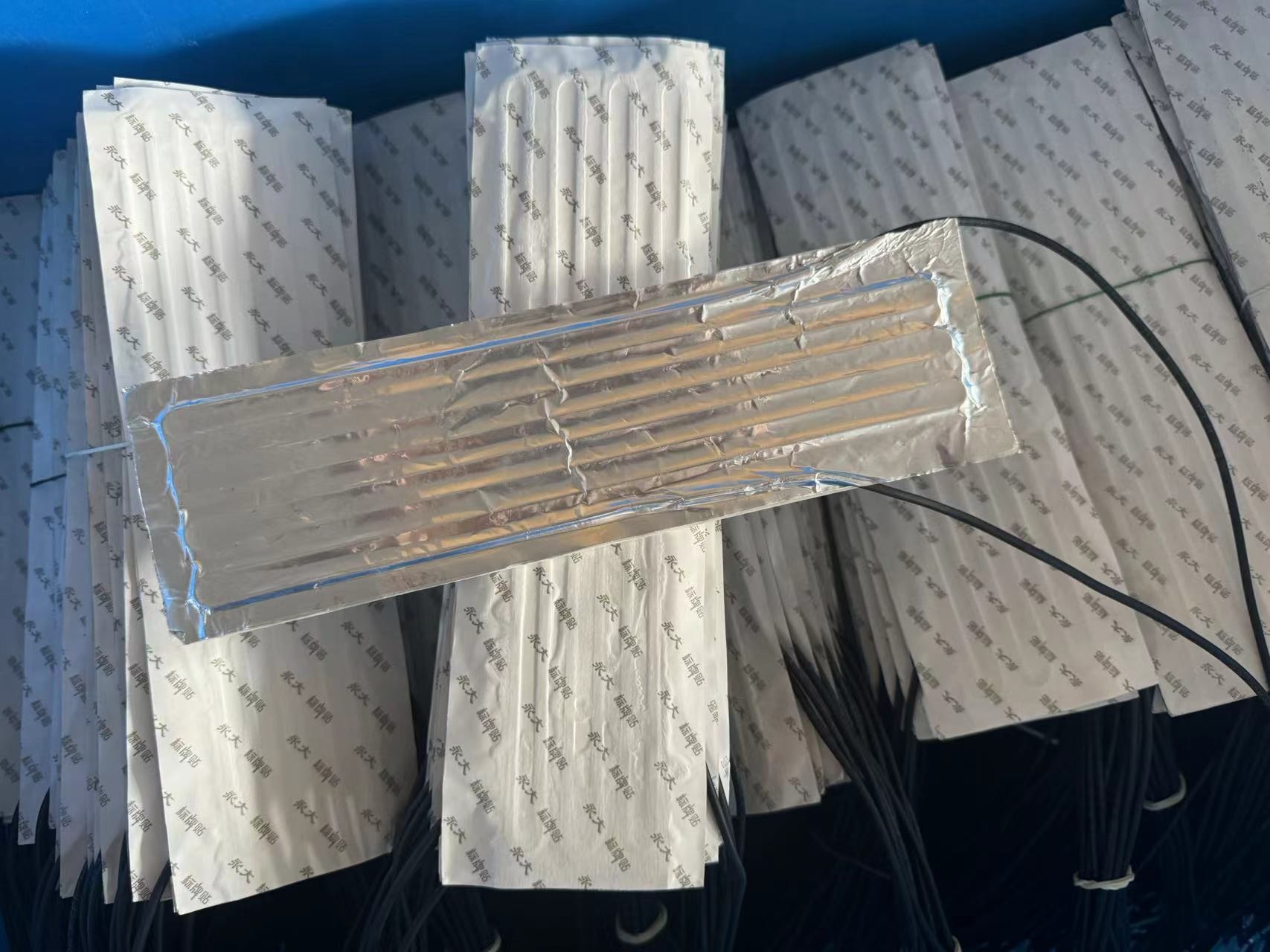
1. Structure & Working Principle
Aluminum foil heater pads are thin, flexible sheet-shaped heating elements with a layered design for efficient and safe heating:
*** Core: Insulated heating wire/heating core arranged in an arch shape for uniform heat generation
*** Cladding: High thermal conductivity aluminum foil laminated on both sides, enabling instant and even heat conduction
*** Backing: the aluminum foil heaters self-adhesive layer for direct pasting on evaporators, drain pans and drain pipes
*** Working principle: When powered on, the heating core generates heat, which is quickly and evenly spread by the aluminum foil to melt the frost layer on the contact surface with zero heat concentration.
2. 6 Core Advantages of Aluminum Foil Heater Pads
① Ultra-thin & Flexible, Perfect Fit for Evaporators
— Ultra-thin thickness (only 0.3–1.5mm), bendable and cuttable to fit custom sizes
— The aluminum foil heater pads can be closely attached to curved/irregular surfaces such as evaporator fins, pipelines, drain pans and drain pipes
— Traditional tubular defrost heaters are rigid hard tubes with only point/line contact, leading to large gaps and serious heat loss
② High Thermal Efficiency, Rapid Heating & Energy Saving
— Aluminum foil features extremely high thermal conductivity, realizing instant heat spreading and full-area uniform heating
— Sheet heating vs traditional point/line heating: No local overheating, no cold zones, and thorough defrosting
— Heat is directly transferred to the frost layer with minimal heat loss → shorter defrosting time and lower power consumption
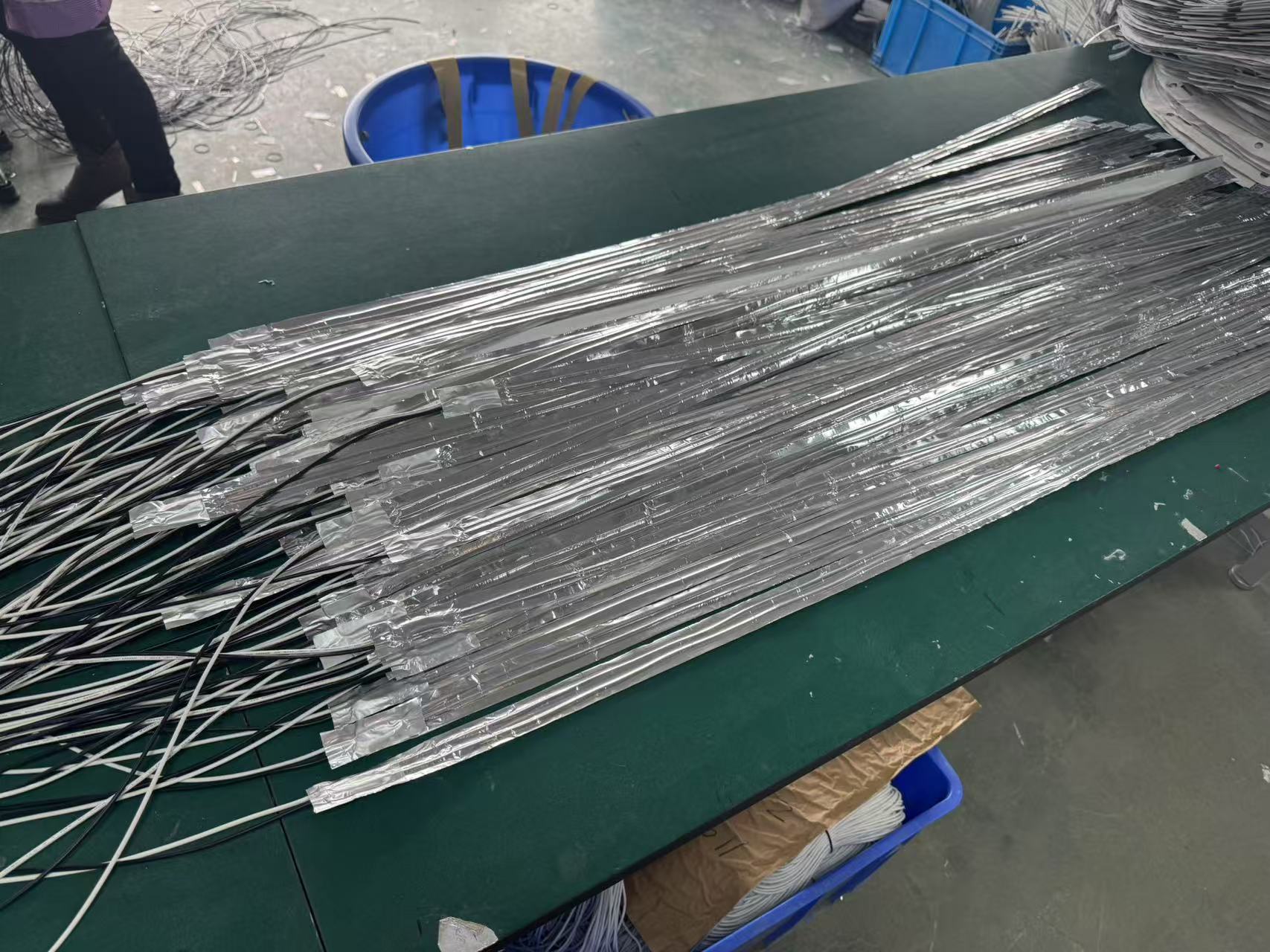
③ Moisture & Water Resistant, Ideal for Harsh Refrigerator Environments
— Fully sealed aluminum foil structure with an insulating layer, achieving waterproof, anti-condensation, oil-resistant and corrosion-resistant performance
— Stable operation under high humidity, low temperature and repeated cold-heat cycles, no easy oxidation, electric leakage or short circuit
— Traditional tubular heaters are prone to insulation aging, electric leakage and burnout in humid environments
④ Super Easy Installation: Peel & Stick, Done in 5 Minutes
— Equipped with a strong self-adhesive backing, directly paste on evaporators/drain pans/drain pipes without additional tools
— No brackets, no fixing screws, space-saving and no impact on air duct airflow
— Tubular defrost heaters require bracket fixing, welding/screwing, take up much space and are easy to be damaged during installation
⑤ Long Service Life, Low Failure Rate & Minimal Maintenance
— No mechanical stress, no easy wire breakage, ablation or scaling
— Aluminum foil is anti-oxidation and resistant to extreme temperatures (-40℃~150℃)
— 30%–50% longer service life than traditional tubular heaters, with fewer repairs and replacements
⑥ Low Cost & High Cost-Effectiveness
— Lightweight materials and simple production process → more affordable price
— Energy saving + long service life → lower long-term use cost
— Convenient replacement → saving labor and maintenance fees
3. Aluminum Foil Heater Pad vs Traditional Tubular Heater
| Comparison Item | Aluminum Foil Heater Pad | Traditional Tubular Heater (Steel/Aluminum Tube) |
|---|---|---|
| Structure | Ultra-thin, flexible, sheet heating | Rigid, tubular, point/line heating |
| Fit Degree | 100% fit for curved fins/pipelines | Point/line contact, large gaps, heavy heat loss |
| Thermal Efficiency | High, uniform heating, fast defrosting, energy-saving | Low, local overheating, uneven heating |
| Installation | Self-adhesive, peel & stick, 5 mins to finish | Bracket required, complex fixing, space-consuming |
| Moisture/Water Resistance | Fully sealed, stable in humid environment | Prone to moisture damage, high leakage risk |
| Service Life | Long, low failure rate | Short, easy to burn out, frequent repairs |
| Overall Cost | Low, high cost-effectiveness | High, frequent replacement increases cost |
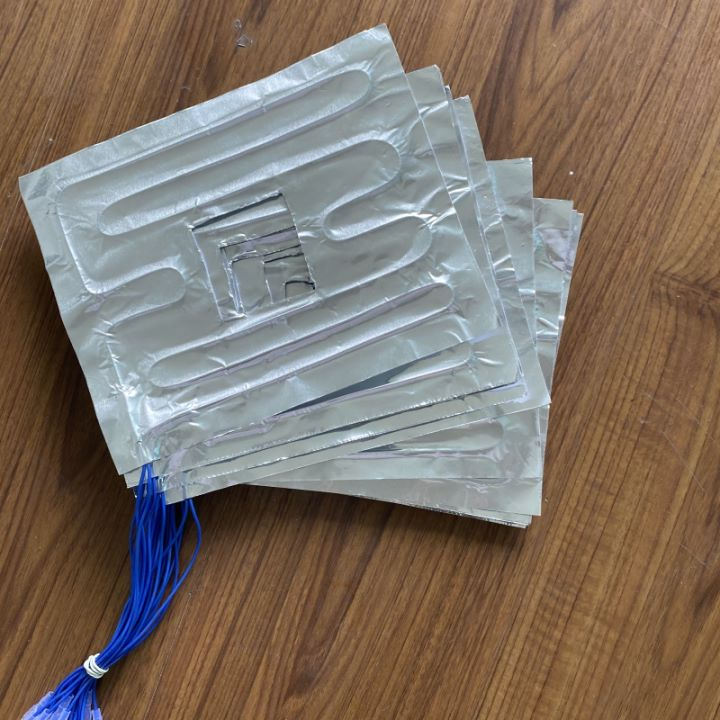
4. Applicable Scenarios (Full Coverage for Refrigerator Defrosting)
— Evaporator defrosting (the mainstream choice for frost-free refrigerators)
— Drain pan heating (prevent defrost water from refreezing and causing blockage)
— Drain pipe anti-freezing (avoid ice blockage and water leakage)
— Frost prevention for air vents/ducts in freezers
5. Summary
Aluminum foil heater pads are the optimal solution for refrigerator defrosting, with the comprehensive advantages of flexible fit, efficient and uniform heating, waterproof and durable performance, easy installation, energy saving and low cost. They outperform traditional tubular heaters in all aspects and have thus become the standard defrosting component for modern frost-free refrigerators, freezers and deep freezers.
Post time: Mar-28-2026