


In the efficient operation system of refrigeration equipment such as refrigerators and air coolers, the stainless steel defrost heater tube is a key core component that ensures equipment performance and reduces energy consumption. Through precise electric heating defrosting, it solves the problems of reduced heat exchange efficiency and increased energy consumption caused by frost formation on evaporators. Widely used in household, commercial and industrial refrigeration scenarios, it is an indispensable basic component of modern refrigeration technology. The rationality of its product parameters and selection directly determines the operational stability and energy-saving effect of refrigeration equipment.
I. Core Function: Solving the “Frost Formation Problem” of Refrigeration Equipment
During the operation of refrigeration equipment, the surface temperature of the evaporator is often lower than -15℃, and water vapor in the air will continuously condense into frost. Excessively thick frost will block the evaporator air duct, hinder heat exchange, directly lead to poor refrigeration effect, increased compressor load, sharp rise in power consumption, and even cause equipment failure.
The core value of the sus304 defrost heater tube lies in completing defrosting operations automatically, efficiently and safely:
- Ensuring heat exchange efficiency: The defrost heater element heats up quickly (40-60℃) after being energized, accurately melts the frost layer on the evaporator surface, restores the heat exchange capacity of the evaporator, and ensures the stable output of cold energy by the refrigeration system.
- Reducing operational energy consumption: The defrost heating element avoids long-term high-load operation of the compressor caused by excessively thick frost, reduces invalid energy consumption, and improves the overall energy efficiency ratio of the equipment.
- Extending equipment service life: The defrost heater reduces the corrosion and mechanical stress of the frost layer on the evaporator, reduces the loss of core components such as compressors and fans, and extends the overall service life of refrigeration equipment.
- Realizing automatic operation and maintenance: Cooperating with defrost timers and temperature sensors to achieve fully automatic defrost control, no manual intervention is required, which is suitable for the intelligent needs of modern refrigeration equipment.
II. Structure, Working Principle and Core Product Parameters
1. Core Structure
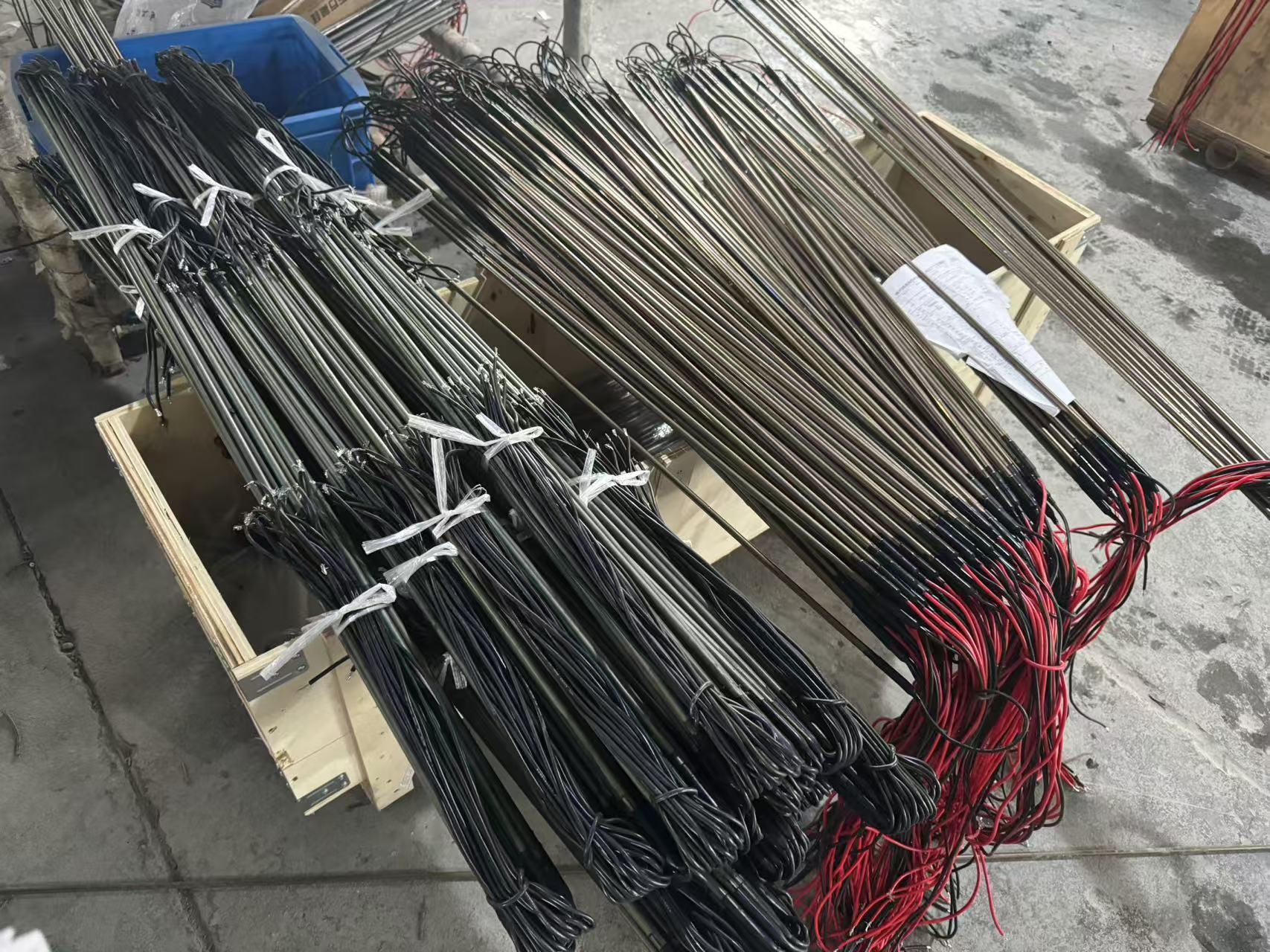
The stainless steel defrost heater element adopts a mature metal tubular electric heating element structure, and its core components include:
- Shell: The mainstream adopts 304/316/316L stainless steel seamless tube, which has excellent corrosion resistance, high temperature resistance and mechanical strength, and is suitable for humid and low-temperature refrigeration environments.
- Heating element: The interior is filled with nickel-chromium alloy (Cr20Ni80) or iron-chromium-aluminum (FeCrAl) high-resistance electric heating wire, which generates heat efficiently after being energized, with a heating efficiency of more than 95%.
- Insulating medium: High-density crystalline magnesium oxide powder (MgO) is filled between the electric heating wire and the shell, which has good thermal conductivity and insulation, and the insulation resistance is ≥100MΩ to ensure safe use.
- Sealing and lead-out: Both ends are sealed with silicone rubber or neoprene, matched with copper or stainless steel lead-out rods/wires to adapt to equipment circuit connection. Some products integrate temperature controllers and fuse links to improve safety factors.
2. Working Process (Fully Automatic Defrost Cycle)
1. Frost formation stage: The refrigeration equipment operates, the evaporator continues to cool down, water in the air condenses into frost, and the frost layer gradually thickens.
2. Defrost start: After the equipment has been running for 8-12 hours (or intelligently determined by the microcomputer main board according to the frequency of use and ambient temperature), the defrost control system is triggered, the compressor stops, and the heater tube is energized and started.
3. Defrost stage: The heater tube heats up, heat is transferred to the evaporator, the frost layer melts into water quickly, flows into the water pan through the drain hole, and then is treated by evaporation or external discharge.
4. Reset stage: The defrost temperature controller detects that the evaporator temperature rises to the set value (usually +10℃), the heater tube is de-energized, the compressor restarts, and the equipment returns to the refrigeration mode to complete a defrost cycle.
3. Core Product Parameters (Industry General Standards)
|
Parameter Category
|
Specific Parameters
|
Description
|
|
Rated Voltage
|
220V/380V (Customizable)
|
220V for household use, 380V three-phase power supply for industrial/commercial use
|
|
Rated Power
|
50W-5000W (Customizable)
|
Household refrigerators: 50-200W; Air coolers/cold storage: 500-5000W
|
|
Shell Material
|
304/316/316L Stainless Steel
|
304 is suitable for ordinary humid environments; 316/316L is suitable for high-corrosion and high-humidity scenarios (such as cold storage, seafood refrigeration)
|
|
Tube Diameter Specification
|
Φ6.5mm- Φ10.7mm (Commonly Φ8mm)
|
Selected according to the evaporator structure; the smaller the tube diameter, the more suitable for compact spaces
|
|
Operating Temperature
|
-40℃~120℃
|
Can withstand the alternation of low refrigeration temperature and high defrost temperature without deformation or damage
|
|
Service Life
|
≥5000 Hours (Continuous Operation)
|
The service life of 316L material can be extended to more than 8000 hours
|
|
Protection Level
|
IP44/IP54 (Customizable IP65)
|
IP44 is splash-proof, IP54 is dust-proof and splash-proof, suitable for different refrigeration environments
|
III. Material Advantages: Why Stainless Steel is the First Choice for Refrigeration Defrosting
Compared with materials such as aluminum and copper, stainless steel has irreplaceable advantages in refrigeration defrosting scenarios:
- Super corrosion resistance: 304/316 stainless steel can resist corrosion from moisture, condensed water, weak acids and weak alkalis, and is suitable for harsh environments such as cold storage and commercial freezers. Its service life is much longer than that of aluminum tubes (the service life of aluminum tubes is usually only 2000-3000 hours).
- High temperature resistance and thermal shock resistance: It can withstand the alternation of high temperature (60℃) during defrosting and low temperature (-40℃) during refrigeration, and will not deform or be damaged after long-term use, avoiding leakage risks caused by material aging.
- High mechanical strength: The pipe wall has good rigidity, can withstand vibration and impact during equipment installation and transportation, is suitable for the installation of complex structures such as finned evaporators, and is not easy to break.
- Hygiene and safety: The surface is smooth and easy to clean, no harmful substances are precipitated, which meets the hygiene requirements of food cold chain and medical refrigeration, and can be directly used in storage equipment for sensitive items such as fresh food and vaccines.
IV. Application Scope: Covering Full-Scenario Refrigeration Equipment
With stable performance and flexible parameter adaptability, stainless steel defrost heater tubes have become standard accessories in the refrigeration industry, with a wide range of applications. The key points of selection vary slightly in different scenarios:
1. Household Refrigeration Equipment (Core Scenario)
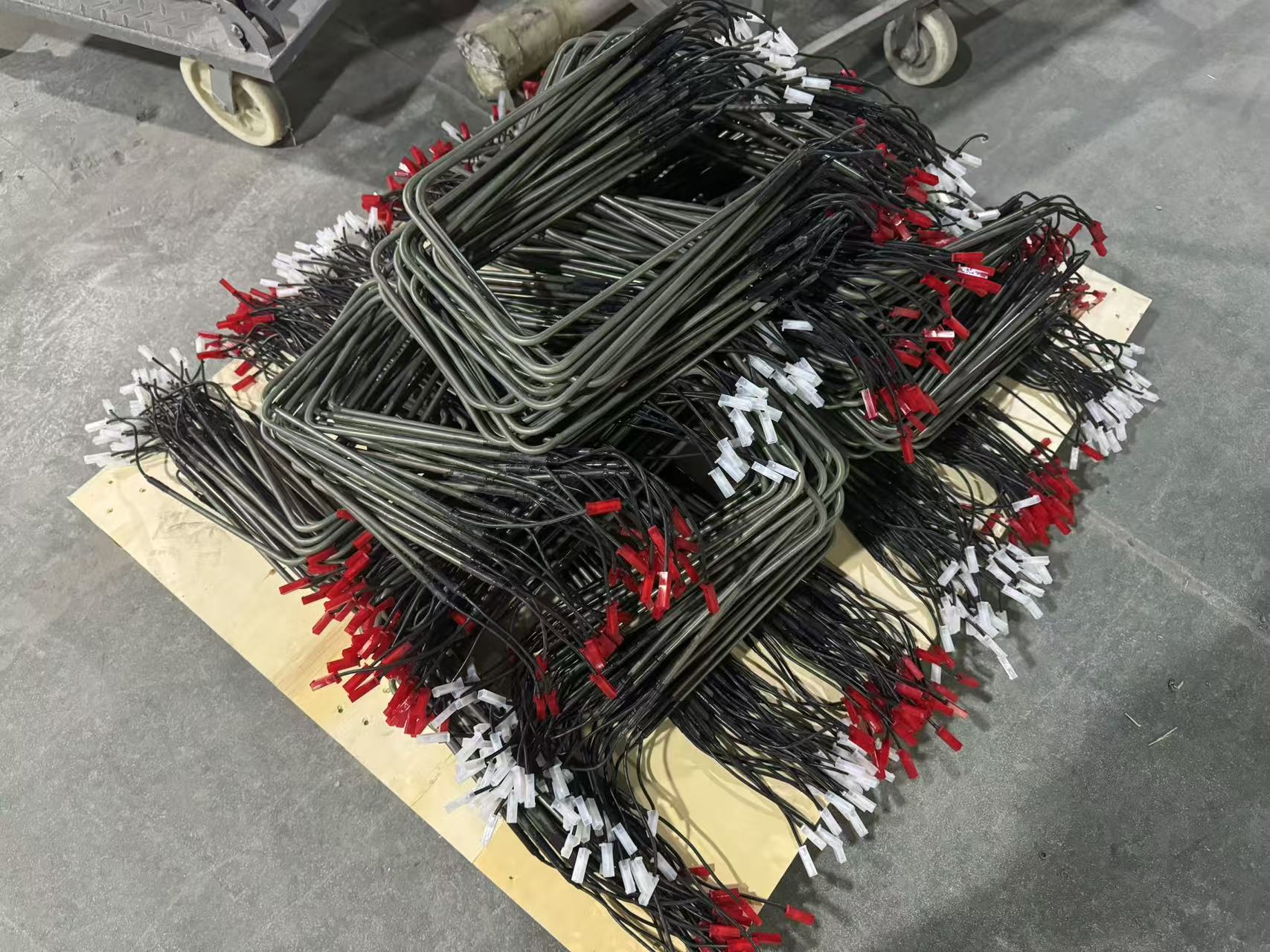
- Air-cooled frost-free refrigerators/freezers: Installed at the bottom of the evaporator or between fins, it is the core component to realize the “frost-free” function, suitable for household double-door, multi-door refrigerators and vertical freezers. Selection focus: power 50-200W, pipe diameter Φ6-Φ8mm, 304 stainless steel material.
- Embedded refrigeration appliances: Such as embedded wine cabinets and refrigerators, to ensure uniform temperature inside the equipment and avoid frost affecting the storage of collections. Selection focus: low power (50-100W), IP44 protection, miniaturized design.
2. Commercial Refrigeration Equipment
- Supermarket display cabinets: Beverage cabinets, ice cream cabinets, delicatessen cabinets, fresh refrigerated cabinets. High-frequency defrosting ensures display effect and refrigeration performance, and reduces energy consumption. Selection focus: power 200-1000W, 304/316 stainless steel, IP54 protection.
- Commercial kitchen freezers: Vertical/horizontal freezers and workbench refrigerators in hotels, restaurants and canteens, suitable for high-humidity kitchen environments and stable defrosting. Selection focus: power 300-1500W, 316 stainless steel, oil-proof design.
- Cold chain convenience store equipment: Refrigerated air curtain cabinets and frozen island cabinets, ensuring 24-hour continuous operation and reducing maintenance costs. Selection focus: power 500-2000W, IP54 protection, long-life design.
3. Industrial and Cold Chain Refrigeration Equipment
- Cold storage air coolers: The main choice for electric heating defrosting of evaporators in medium and large high-temperature cold storage (0-4℃, fruit and vegetable storage) and low-temperature cold storage (-18℃ to -25℃, frozen food). Selection focus: power 1000-5000W, 316L stainless steel, pipe diameter Φ10-Φ16mm, IP54 and above protection.
- Refrigerated containers/cold chain vehicles: Defrosting of evaporators in mobile refrigeration equipment, suitable for complex environments during long-distance transportation. Selection focus: vibration resistance, IP65 protection, wide voltage adaptation (110V-380V).
- Professional refrigeration units: Medical vaccine cold storage, biological sample refrigeration equipment, industrial low-temperature refrigeration units, meeting the needs of high-precision and high-stability defrosting. Selection focus: 316L stainless steel, integrated temperature controller, precise power adjustment.
V. Selection Points: Accurately Matching Refrigeration Equipment Needs
The selection of stainless steel defrost heater tubes directly affects the operational efficiency and safety of refrigeration equipment. The core selection points are as follows to avoid equipment failure or increased energy consumption caused by improper selection:
- Power matching: Select according to evaporator area, refrigerating capacity and ambient humidity. Too small power will lead to incomplete defrosting, and too large power will increase energy consumption and damage the evaporator. Generally, 100-200W power is matched per square meter of evaporator.
- Material selection: Choose 304 stainless steel for ordinary humid environments (household refrigerators); choose 316/316L stainless steel for high-humidity and high-corrosion environments (cold storage, seafood refrigeration) to extend service life.
- Specification adaptation: The pipe diameter and length need to match the evaporator installation space. Finned evaporators prefer thin pipe diameters (Φ6-Φ8mm), and tubular evaporators can choose thick pipe diameters (Φ10-Φ16mm); the length of the lead-out wire needs to adapt to the equipment circuit layout to avoid poor contact caused by too long wiring.
- Protection level: IP44 is sufficient for household scenarios, IP54 and above for commercial/industrial scenarios (high humidity, dusty), and IP65 protection for outdoor or mobile refrigeration equipment (cold chain vehicles) to prevent short circuits caused by water or dust ingress.
- Safety configuration: Priority is given to products integrated with temperature controllers and fuse links, which can prevent excessive defrosting and overheating from damaging the equipment and improve use safety; for medical and food scenarios, choose RoHS-compliant products with no harmful substances precipitated.
VI. Industry Value and Development Trends
1. Core Industry Value
Stainless steel defrost heater tubes are the basic guarantee for refrigeration equipment to achieve “high efficiency, energy saving and intelligence”, directly affecting the energy efficiency level, service life and user experience of the equipment. Under the “dual carbon” goal, its characteristics of efficient defrosting and reduced energy consumption have become key accessories for the energy-saving upgrading of refrigeration equipment. According to industry data, refrigeration equipment equipped with high-quality stainless steel defrost heater tubes can reduce energy consumption by 15%-25% and extend equipment service life by more than 30%.
2. Technological Development Trends
- Intelligent upgrading: Integrate NTC temperature sensors and PTC heating elements to realize adaptive adjustment of defrost power, automatically adjust heating power according to frost layer thickness, further reduce energy consumption, and adapt to the Internet of Things management and control needs of intelligent refrigeration equipment.
- Material optimization: The application ratio of high-end stainless steel such as 316L and 310S is increasing, and antibacterial stainless steel materials are being developed to adapt to high-end refrigeration scenarios such as medical and food, and improve hygiene and safety levels.
- Structural innovation: The research, development and promotion of finned and spiral defrost heater tubes increase the heat exchange area, shorten the defrost time (20%-30% shorter than traditional straight tubes), and adapt to refrigeration equipment with higher power and more complex structures.
- Green environmental protection: Adopt fluorine-free insulating materials and RoHS-compliant materials to reduce environmental impact during production and use, in line with global environmental protection standards; at the same time, optimize heating efficiency to further reduce energy consumption.
Conclusion
Although the stainless steel defrost heater tube is small in size, it is an “invisible guardian” for the efficient operation of refrigeration equipment such as refrigerators and air coolers. With its stable electric heating defrosting technology and excellent material performance, it solves the frost formation pain point in the refrigeration industry. At the same time, through precise selection and technological upgrading, it promotes household, commercial and industrial refrigeration equipment to develop in a more efficient, energy-saving and intelligent direction. With the continuous upgrading of the refrigeration industry and the in-depth advancement of the “dual carbon” goal, the technological iteration and application expansion of stainless steel defrost heater tubes will provide more solid support for the green development of the global cold chain and refrigeration industry, and become a core growth pole in the refrigeration accessories field.
Post time: Mar-03-2026